The rubber gasket around a front loading washing machine door has a fold in it that traps water after every cycle. That fold stays damp between washes, collects lint, hair and detergent residue, and grows black mould. It is the single most common source of a smelly washing machine and the part people are least likely to check.
Where exactly should you look?
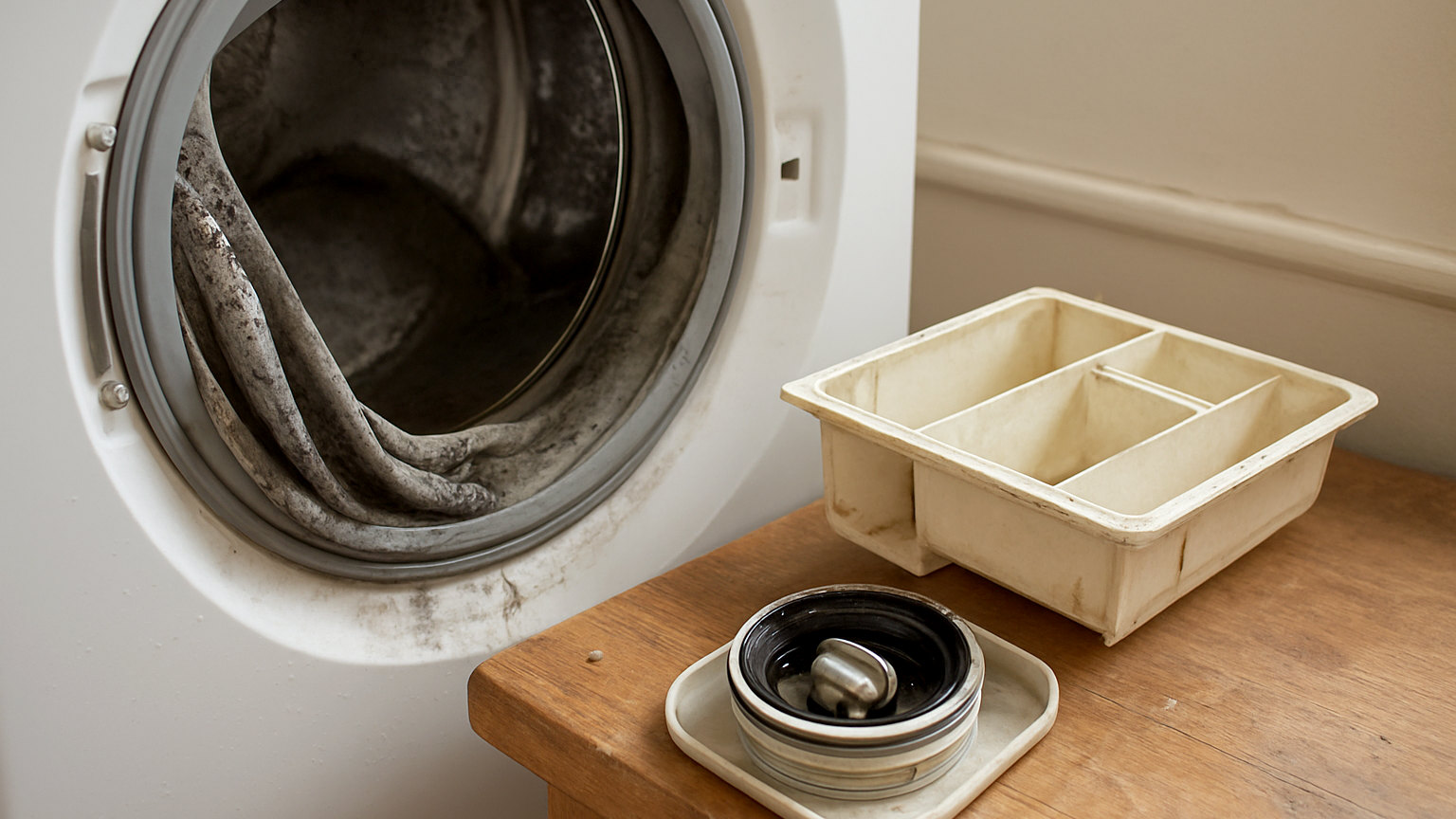
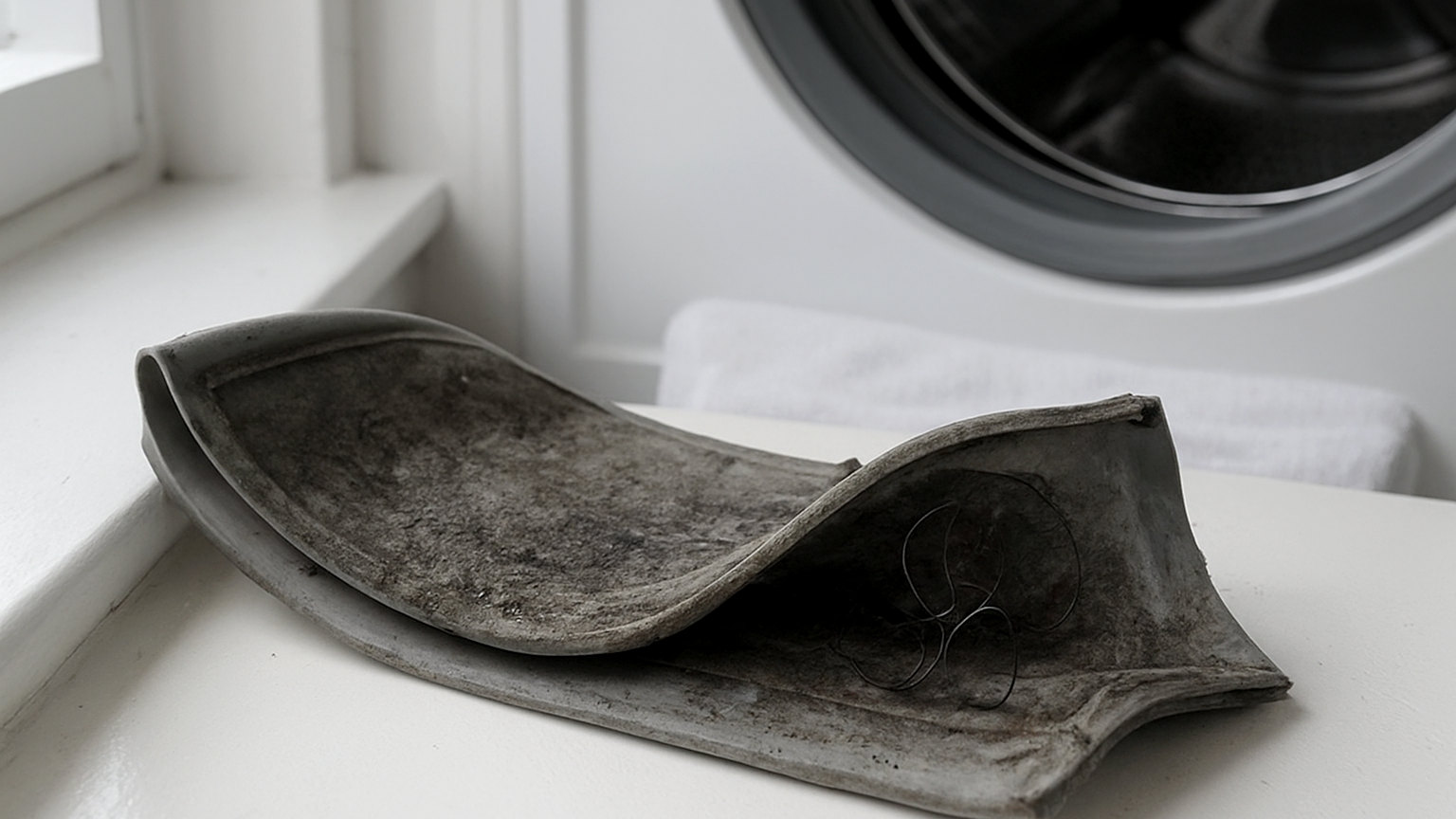
Pull the rubber seal towards you at the bottom of the door opening, firmly, so the fold opens out. There is usually a channel there holding water, along with a surprising collection of hair, coins, bra wires, tissue fragments and grey sludge.
Check the whole way round, though the bottom third is where the problems are.
What is the cleaning method?
- Pull the seal back and remove any solid debris by hand.
- Soak a cloth in hot water with washing up liquid, or a solution of white vinegar.
- Wipe into the fold, working right round and getting into the channel.
- Use an old toothbrush on the folds and the corners.
- For black spotting, apply a cloth soaked in white vinegar or a diluted bleach solution and leave it in place for fifteen minutes.
- Wipe again and rinse with a clean damp cloth.
- Dry the fold thoroughly with a towel.
The drying matters as much as the cleaning. A seal wiped and left wet is back to the same condition within a week.
Does black mould come out?
Surface growth does, and growth that has penetrated the rubber does not. Black spots that lighten to grey and reappear within a fortnight are inside the material, and no product will remove them permanently.
At that point the marks are cosmetic provided the seal is otherwise sound and kept dry. A seal that is perished, torn or leaking is a replacement part.
Should you use bleach?
Sparingly and diluted, for black spotting only. Bleach degrades rubber over time and repeated use will shorten the life of the seal. Rinse thoroughly afterwards, since residue left in the fold will end up in the next wash.
White vinegar is gentler, has a genuine antifungal effect and is the better routine choice. Never use both together.
What causes it?
- Washing at low temperatures, which does not clear the residue the mould feeds on.
- Fabric conditioner, which leaves a waxy film in the seal.
- Too much detergent, which is not fully rinsed away.
- Closing the door immediately after a wash, which keeps the fold wet.
- Leaving wet washing in the drum.
How do you stop it coming back?
Wipe the seal dry with a towel after the last wash of the day, which takes ten seconds. Leave the door ajar between washes so air can circulate. Use less detergent, skip the fabric conditioner, and run a hot maintenance wash monthly.
The towel habit alone makes more difference than any product.
What gets caught in there?
Coins, buttons, hair grips, bra underwires, screws and small items from pockets all end up in the seal fold, and from there they can work into the drum outlet and damage the pump. Checking the seal is worth doing for that reason alone, not just for cleanliness.
A grinding noise during a spin usually means something metal has got past the seal.
How often should it be done?
Wipe it dry daily or after the last load. Clean it properly once a month alongside the maintenance wash and the detergent drawer. Five minutes a month prevents the problem entirely.
Does a top loader have the same problem?
Far less, because there is no front door gasket holding water. Top loading machines have their own version in the lid seal and around the rim of the drum, and both should be wiped occasionally. The lid should still be left open after a cycle so the drum can dry.
When does a seal need replacing?
When it is torn, perished, permanently distorted or leaking. Water appearing at the bottom of the door during a wash is the usual sign. Seals are available as spare parts for most machines and fitting one is a fiddly job rather than a difficult one, though on many models it is worth paying an engineer given the drum has to be partly dismantled.