Grout has a finite life, particularly in a shower. When it cracks, crumbles or falls out, water reaches the wall behind the tiles, and that is the point at which the problem stops being about appearance. Plasterboard, timber and adhesive behind a tiled wall all suffer when water gets to them.
What are the signs?
- Cracks along a grout line, particularly at internal corners.
- Grout that crumbles when you run a fingernail along it.
- Missing sections, however small.
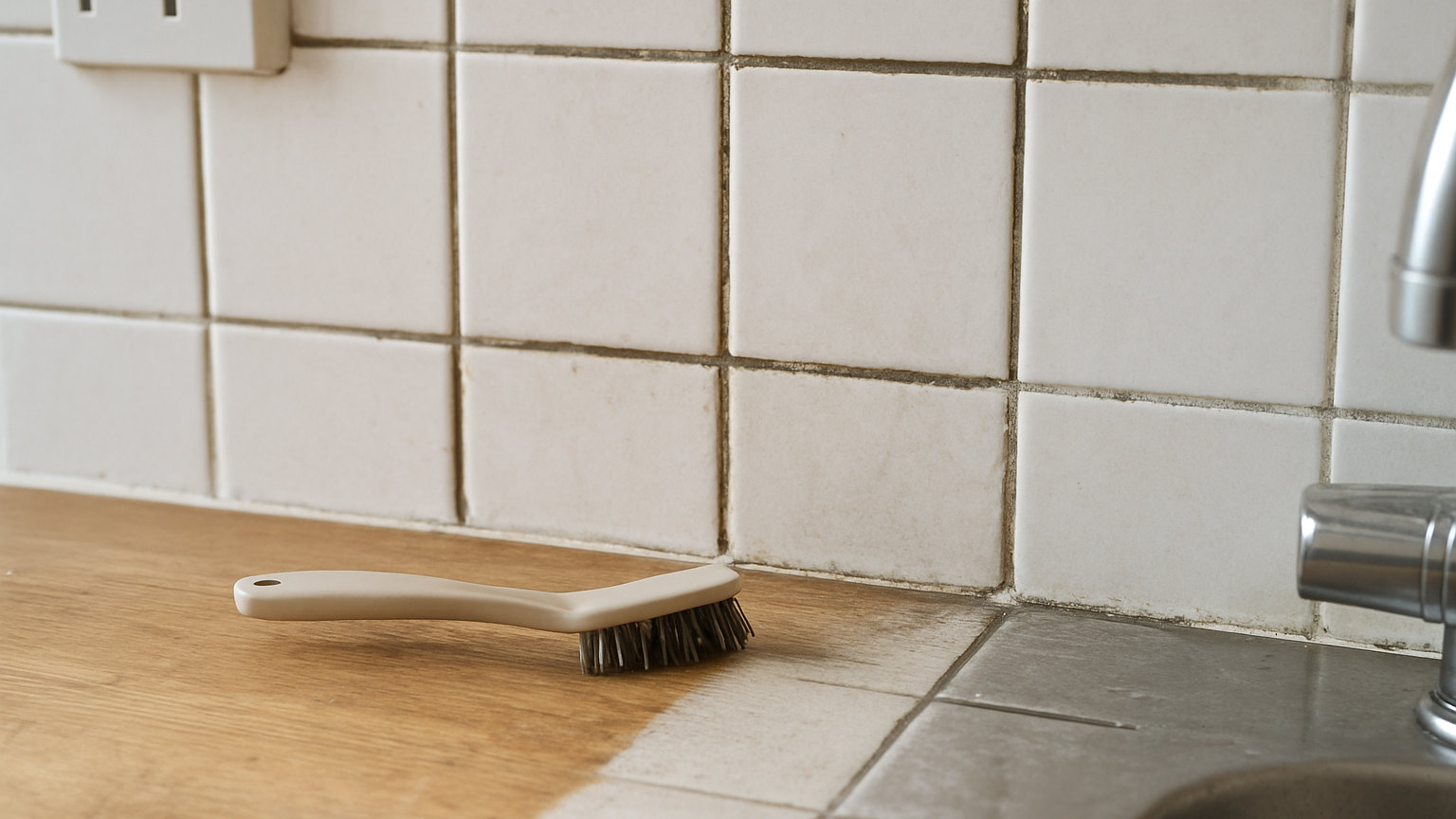
- Black growth that returns within a fortnight of a thorough clean.
- A hollow sound when you tap a tile, which means it has come away from the wall.
- Loose or moving tiles.
- Damp or staining on the other side of the wall.
The last three are urgent. A hollow or loose tile means water has already been getting behind.
Why do internal corners crack?
Because they move. Two walls, or a wall and a floor, flex slightly relative to each other, and rigid cement grout has no give. Corners and the joint between a bath and the tiles should be filled with flexible silicone rather than grout for exactly this reason.
Cracked grout in a corner should be raked out and replaced with silicone rather than more grout, or it will crack again.
How is grout replaced?
- Rake out the old grout with a grout saw, an oscillating tool with a grout blade, or a manual rake.
- Remove it to a reasonable depth, at least two thirds of the joint.
- Vacuum out all the dust and debris.
- Wipe the joints with a damp sponge and let them dry completely.
- Mix the new grout to the stated consistency.
- Work it into the joints with a grout float held at an angle.
- Remove the excess diagonally across the tiles.
- Sponge the tiles clean as it starts to set, rinsing the sponge frequently.
- Buff off the haze once dry, and seal after the full curing time.
Can you grout over old grout?
Not successfully. A thin skim of new grout over old has nothing to key into and will crack and fall out within months. The old material has to come out to a proper depth first.
It is the most common shortcut and the most common reason a regrouting job fails.
How difficult is it?
The raking out is the slow and dusty part; the grouting itself is straightforward. A shower enclosure is a weekend job for someone comfortable with tools, and an oscillating multi tool with a grout blade makes an enormous difference to the time.
Wear eye protection and a dust mask, since grout dust contains silica.
What grout should you use?
Match the joint width: unsanded grout for narrow joints under about three millimetres, sanded for wider ones. Use a flexible or additive grout in a shower, and consider epoxy grout, which is non-porous and lasts far longer, though it is harder to work with.
Match the colour against the existing grout in daylight rather than in a shop.
What about the silicone joints?
Replace them at the same time, since they are usually in worse condition. Remove all the old silicone, clean and dry the joint, treat with a fungicidal wash, and apply a mould resistant sanitary silicone.
Fill the bath with water before sealing along it, and leave it full until the silicone has cured, so the bead is not stretched when the bath flexes under load.
When should you call someone?
When tiles are loose or hollow, when there is damp on the other side of the wall, when the substrate feels soft, or when a large area is affected. Those suggest the problem is behind the tiles, and regrouting the surface will not address it.
How long should grout last?
Fifteen to twenty years in a well ventilated bathroom that is sealed and looked after, and considerably less in a shower that stays wet and has never been sealed. Kitchen splashbacks last longer than showers, and floors depend mostly on how much water sits on them.