Grout that has gone grey or yellow over years has absorbed staining into its structure. Cleaning lifts what it can reach, and at some point there is nothing further to remove. Recognising that point saves a great deal of fruitless scrubbing.
What is the best cleaning approach?
- Dissolve oxygen bleach in warm water to a strong solution.
- Apply it generously along the grout lines.
- Leave it for fifteen to thirty minutes, keeping it wet.
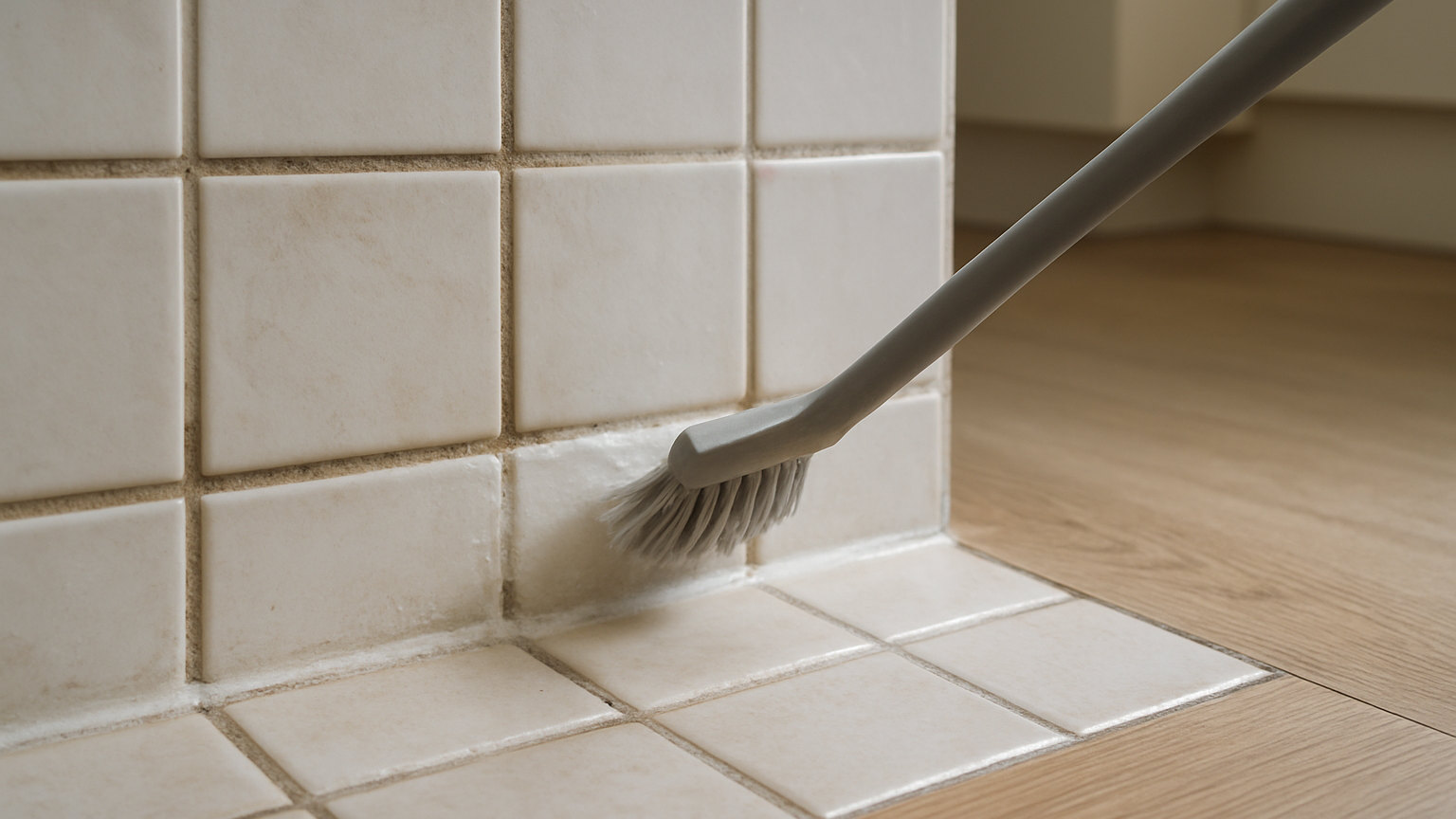
- Scrub each line with a stiff narrow brush.
- Rinse thoroughly and dry.
- Repeat once before deciding it has not worked.
Oxygen bleach is the best general option: it oxidises the staining, it is colour safe, it is safe on natural stone and it does not damage the grout the way acid does.
What about a hydrogen peroxide paste?
Mix bicarbonate of soda with hydrogen peroxide into a paste, spread it along the lines, leave it for thirty minutes and scrub. It works well on white grout and is effectively a homemade version of an oxygen bleach product.
Test on coloured grout first, and keep it off natural stone tiles where the peroxide may lighten the surface.
Should you use chlorine bleach?
It works on white grout and it is a poor routine choice. Repeated use degrades cement grout, making it more porous so it stains faster afterwards, and it does nothing about the underlying absorption.
Use it occasionally on white bathroom grout if you wish, ventilate well, and never alongside any acidic cleaner.
When has cleaning reached its limit?
When two proper treatments with good contact time produce no further improvement. At that point the discolouration is either bonded into the material or the grout surface has eroded, and more scrubbing simply wears it away.
What does a grout pen do?
It applies a coloured sealer over the surface of the grout line, covering the discolouration and sealing at the same time. It is quick, inexpensive and effective, and the result lasts one to three years before it wears at the edges.
The grout must be clean, dry and sound first. A pen will not hold over crumbling grout or active mould.
How do you use one?
- Clean and dry the grout completely, allowing a full day.
- Shake the pen and prime the tip on paper.
- Run it along each line in one pass, keeping the pressure even.
- Wipe any overspill onto the tile immediately with a damp cloth.
- Apply a second coat once dry if the coverage is uneven.
- Leave it to cure for the stated time before the area gets wet.
It is slow work over a large area, and for a bathroom wall it is a comfortable evening.
What is a grout colourant?
A more durable version, applied with a brush and buffed off the tiles, which penetrates and seals as well as colouring. It lasts considerably longer than a pen, often many years, and it is available in a range of colours including matching existing grout.
It takes longer to apply and gives a better and more even result over a whole room.
What if the grout is failing?
Neither a pen nor a colourant will rescue grout that is cracked, crumbling or missing. That needs raking out and regrouting, which is a bigger job and the only genuine fix.
What keeps it white afterwards?
Sealing, ventilation and drying. Squeegee shower walls after use, run the extractor for fifteen to twenty minutes, and reseal annually. Grout that is kept dry and sealed stays white for years without any of the treatments above.
Will it ever look like new?
Cleaning rarely will on grout that is more than a few years old, and a colourant genuinely does. It is worth being realistic before spending an afternoon scrubbing: if two proper treatments have not shifted it, a pen or a colourant will produce the result you are after in less time and for a few pounds.