Coffee machines need two different kinds of cleaning and people usually only do one. Descaling deals with limescale in the boiler and the pipework. Degreasing deals with coffee oils, which build up on every surface the coffee touches and turn rancid, tainting everything made afterwards.
Why are they different jobs?
Descaling uses an acid, usually citric acid, to dissolve mineral deposits. Degreasing uses an alkaline cleaner to break down oils. An acid does nothing to coffee oil and an alkaline cleaner does nothing to scale.
A machine that is descaled regularly and never degreased will still make bitter coffee, and the cause is the rancid oil rather than the water.
What is the routine for a filter machine?
- Wash the carafe, the filter basket and the lid after every use, in hot soapy water.
- Wipe the warming plate and the spray head above the basket.
- Monthly, run a cycle with a descaling solution, then two or three cycles of clean water.
- Check the spray head holes are clear.
- Leave the reservoir lid and the basket open to dry.
Never leave coffee standing in a carafe overnight, which stains it and leaves a bitter residue that is hard to shift.
What is the routine for a pod machine?
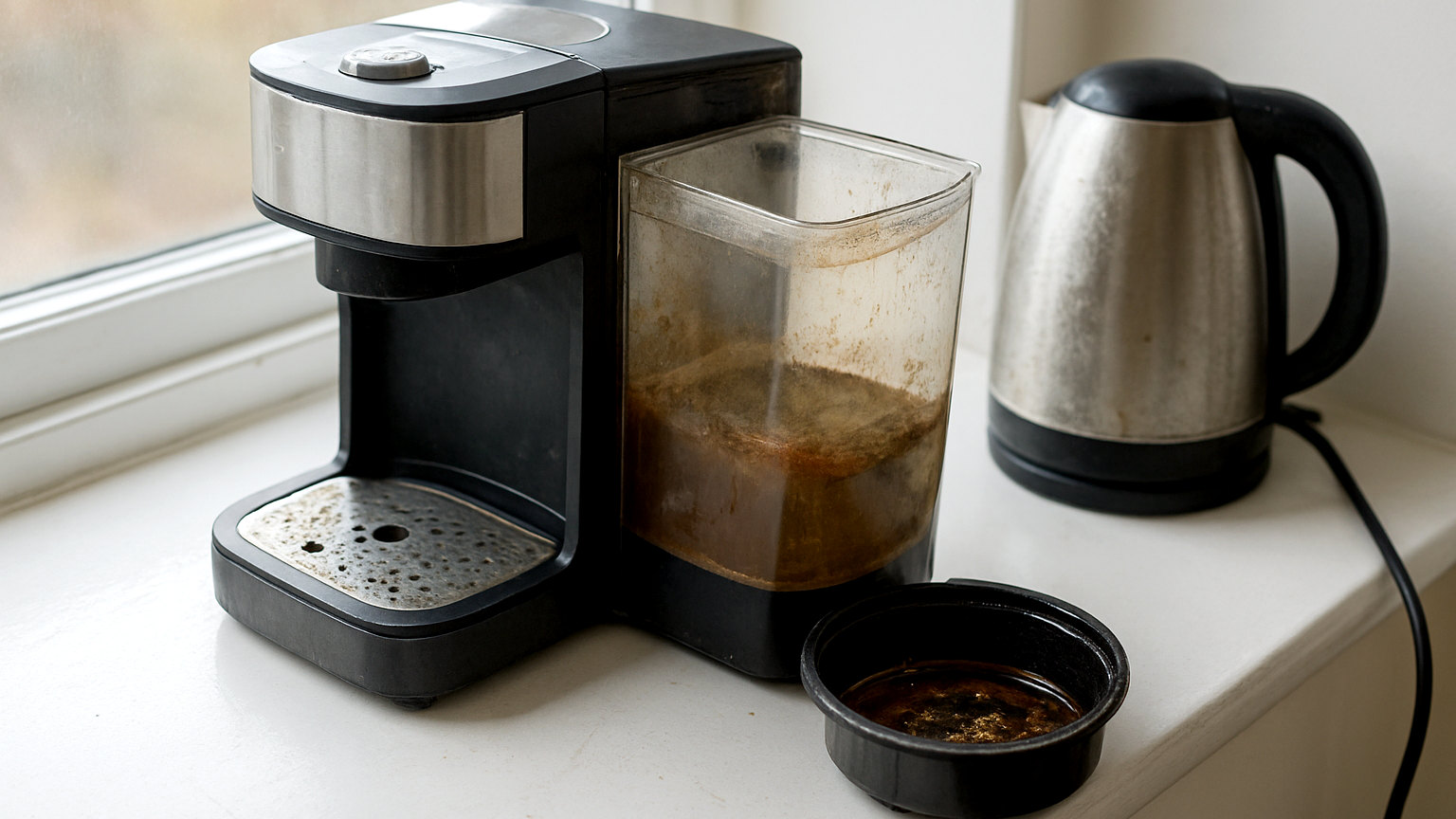
Empty and wash the used pod container and the drip tray every day or two, since both hold liquid and grow mould. Wipe the pod holder and the piercing needle area with a damp cloth.
Descale every two to three months, more often in hard water, using the machine own descaling programme where it has one. Run several water only cycles afterwards.
Run a water only shot before the first coffee of the day, which clears anything sitting in the line.
What is the routine for a bean to cup or espresso machine?
These need the most attention. Wipe the group head and the shower screen daily with a damp cloth, and brush the gasket. Run a backflush cycle with a cleaning powder weekly if the machine supports it.
Empty and wash the drip tray and the grounds container daily. Clean the brew unit according to the manual, which on most bean to cup machines lifts out and is rinsed under a tap.
Descale on the schedule the machine prompts, which is usually based on water hardness and usage.
What about the milk system?
This matters most for hygiene. Purge the steam wand immediately after every use and wipe it with a damp cloth while it is still hot, then purge again. Milk left inside a wand dries into a blockage and sours.
Automatic milk systems and carafes should be rinsed after every session and taken apart and washed thoroughly at least weekly. Most machines have a milk system cleaning programme, and a dedicated milk system cleaner is worth using.
What do the coffee oils do?
They coat the basket, the shower screen, the carafe and the internal pipework. Fresh they are part of what makes coffee taste good; after a few days they oxidise and turn rancid, producing a bitter, stale flavour that people usually blame on the beans.
A dedicated coffee machine cleaning powder or tablet removes them. Washing up liquid works on removable parts.
How often should you descale?
Monthly in very hard water, every two to three months in moderate, and rarely in soft. Most machines with a descale indicator base it on volume rather than hardness, so adjust for your area rather than waiting for the light.
What if the coffee tastes wrong?
Clean before changing beans. Rancid oil in the machine is a far more common cause of bitter coffee than the coffee itself, and a proper degrease often fixes what a new bag of beans does not.
What about the water reservoir?
It grows a biofilm like any container holding standing water, particularly on machines left filled for days. Empty it if the machine will not be used for a while, wash it weekly in warm soapy water, and rinse thoroughly. Filtered water reduces scale and does nothing to prevent the growth.