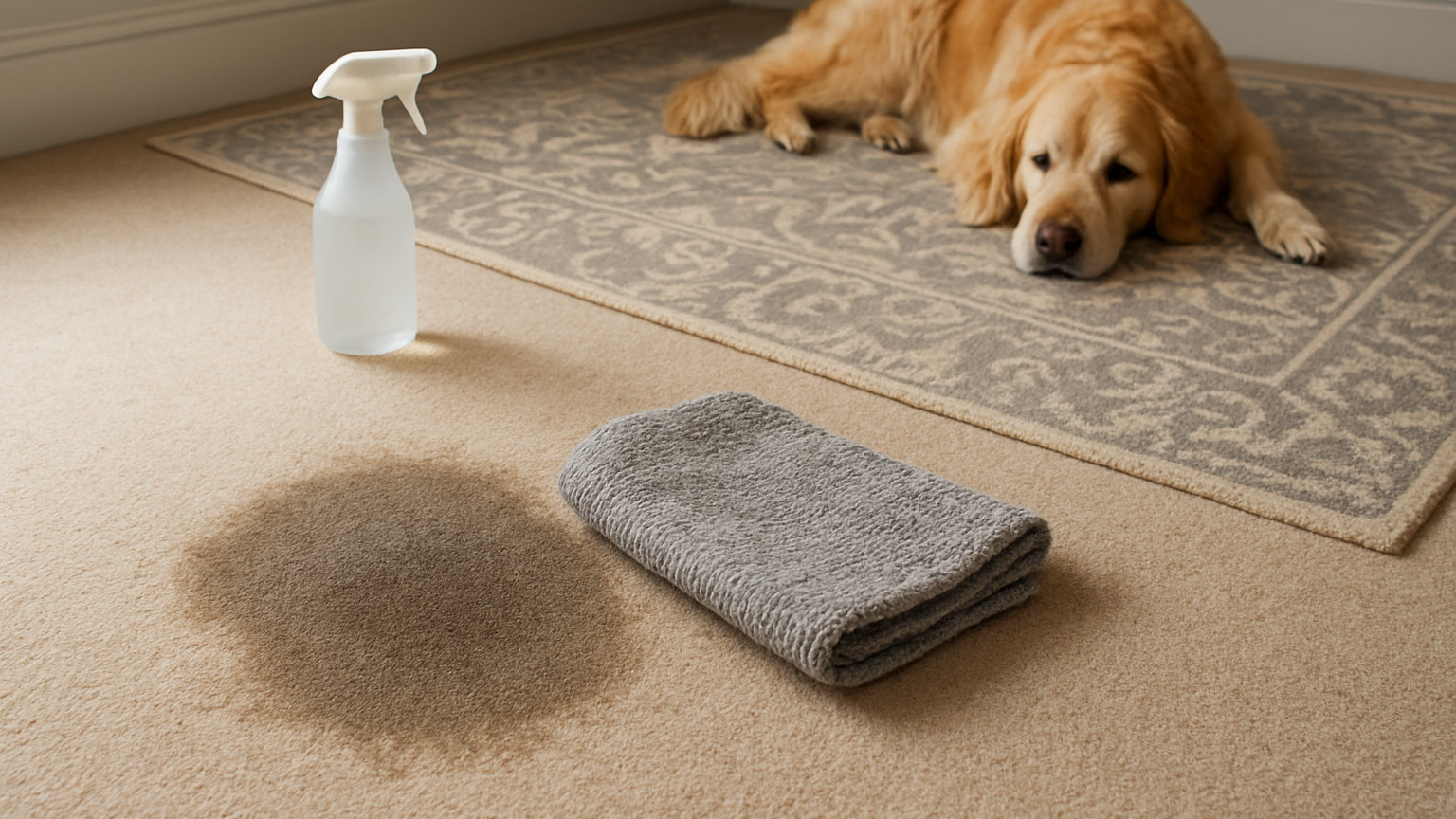
A cleaned spot that smells again a week later, or only on warm damp days, is one of the most common complaints with pet accidents. The explanation is chemical rather than a failure of effort: urine leaves behind uric acid crystals that are not water soluble, and those crystals draw moisture from the air and release odour whenever the humidity rises.
What is actually left behind?
Urine contains urea, uric acid, ammonia, bacteria and hormones. Most of it rinses away readily. Uric acid does not. It crystallises as the moisture evaporates and bonds to the fibre, and it is those crystals that carry the characteristic smell.
They are also hygroscopic, meaning they attract water. On a humid day they absorb enough moisture to become active again, which is why an old spot announces itself in summer and stays quiet in winter.
Why does ordinary cleaning not remove them?
Because detergent works by lifting material into water so it can be carried away, and the crystals are not going into solution. Disinfectant kills bacteria and does nothing to the crystals. Both leave the surface looking and smelling clean while the source remains in place.
This is the one situation where a general purpose cleaner is genuinely the wrong tool rather than merely a weaker one.
What does an enzyme cleaner do differently?
It contains bacteria or enzymes that digest the uric acid and the other organic compounds, breaking them into simpler substances that evaporate or rinse away. The stain is destroyed rather than moved.
That process takes time, which is why contact time matters so much. Enzymes stop working the moment they dry, and a product sprayed on and wiped off after thirty seconds has done almost nothing.
Why do treatments so often fail?
- Too little product. The treatment must reach everywhere the urine reached, which is wider and deeper than the visible mark.
- Not kept wet for long enough. Cover the area with a damp cloth or cling film so the enzymes stay active.
- A previous cleaner still in the fibre. Detergent and disinfectant residue can inhibit the enzymes, so rinse with plain water first.
- Heat used at some point, which set the proteins before the enzymes could work.
- The underlay was never reached, so the residue below continues to smell.
- An old or expired product, since enzyme cleaners lose activity with age and heat.
Why does the animal keep returning to the spot?
Because it can still smell what you cannot. A dog or cat detects residue at concentrations far below human perception, and an untreated or partially treated spot reads as an established toilet area. That is the practical reason for treating thoroughly rather than adequately.
Ammonia based cleaners make this considerably worse, since ammonia is a component of urine and effectively advertises the spot.
How do you know when it has actually gone?
Dampen the area lightly with plain water, leave it ten minutes, then smell it close up. If there is any odour, residue remains. A dry spot tells you very little, since the crystals are inactive until moisture is present.
An ultraviolet torch in a darkened room will also show residual urine as a dull yellow glow, which is useful for confirming whether you treated the whole affected area.
What if repeated treatment does not clear it?
The underlay is the usual answer. Lift a corner of the carpet and check. Where it has been soaked repeatedly, replacing that section of underlay is the only reliable fix, and it costs far less than replacing a carpet.
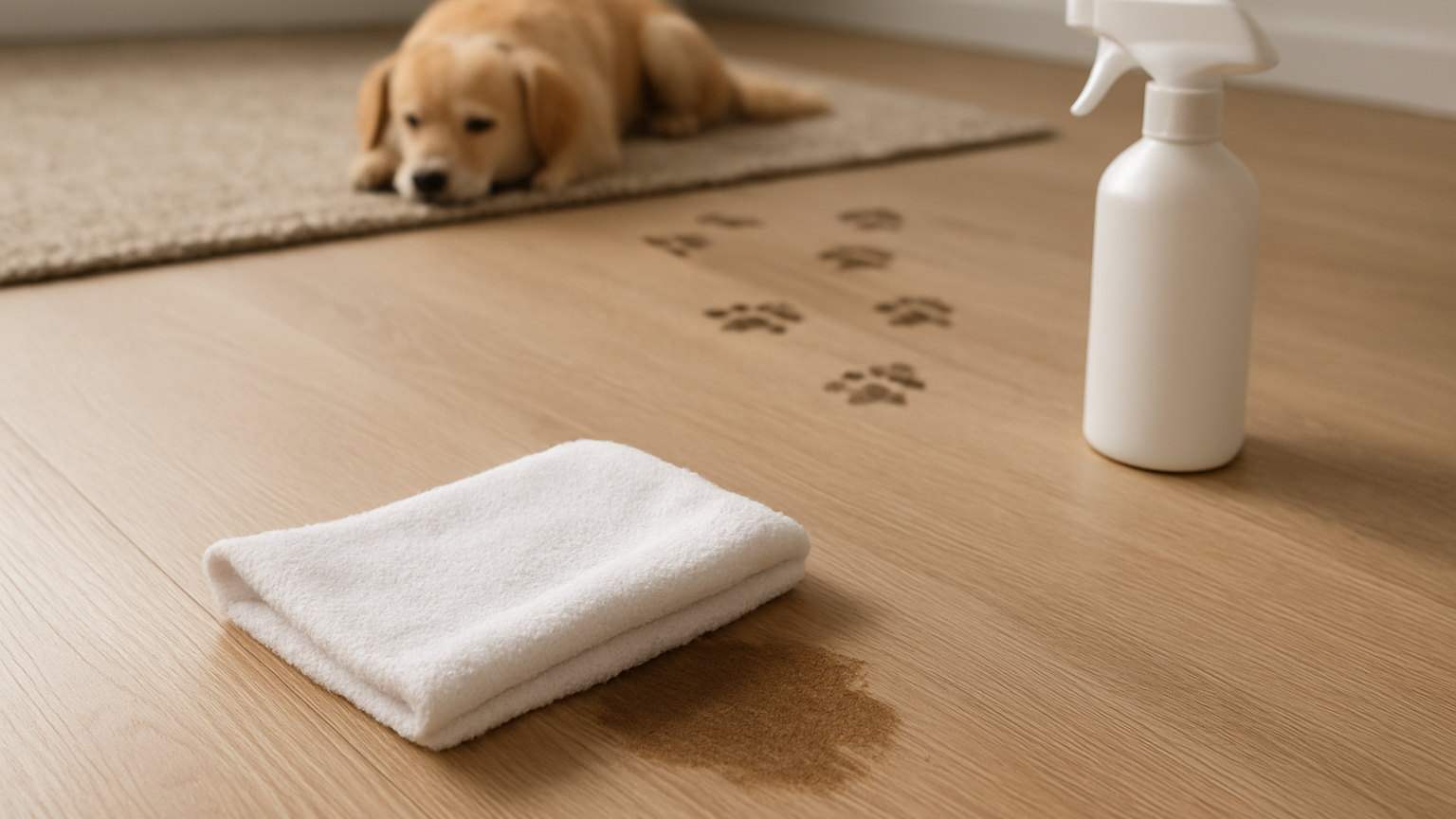
On hard floors, urine that has run into a gap between boards or under a skirting will keep smelling until the joint itself is treated.
Does the weather really make a difference?
A noticeable one, and it confuses people. A spot that was silent all winter can announce itself on the first warm damp day of spring, which makes it seem as though something new has happened. Nothing has: the crystals have simply absorbed enough moisture from the air to become active again. A smell that is seasonal is a reliable sign of untreated residue rather than a fresh accident.