Solvents remove stains that water cannot touch, and they are the single most common way people damage a garment while trying to save it. Each dissolves a different range of materials, and some of those materials are the fabric itself. Knowing which does what prevents the kind of damage that has no remedy.
What does surgical spirit do?
Denatured alcohol dissolves ballpoint ink, permanent marker, many dyes, adhesive residue and some resins. It is the most useful general purpose solvent for domestic stain work.
It is safe on cotton, linen, polyester, nylon and most wool, and it will lift some fabric dyes, particularly on dark cotton and on anything hand dyed. It should be used with care on silk and tested on everything.
What does acetone do?
It dissolves nail varnish, some inks, superglue and many plastics, and that last point is the problem. Acetone destroys acetate, triacetate and modacrylic completely, dissolving the fibre rather than the stain, and it damages many synthetic blends and most plastic buttons and sequins.
It should never be used on anything you cannot positively identify, and never on a garment with plastic trim. On pure cotton and linen it is usually safe.
What does white spirit do?
A petroleum distillate that dissolves oil based paint, tar, wax and heavy grease. It is effective and aggressive, it leaves an oily residue that must then be washed out, and it can damage synthetic fibres and elastane.
Use it on robust cotton and only where something gentler has failed, and always wash the area thoroughly afterwards.
What about eucalyptus oil and citrus solvents?
These are milder and genuinely useful. Eucalyptus based stain removers handle grease, adhesive, wax and some inks, and they are safe on a wider range of fabrics than the stronger solvents. Citrus based degreasers work well on oil and adhesive.
Both leave an oily residue that needs a detergent wash afterwards, and both can affect some dyes, so test first.
Which fibres are most at risk?
- Acetate and triacetate – dissolved by acetone. The highest risk fibre of all.
- Modacrylic and some acrylics – damaged by acetone and strong solvents.
- Elastane – degraded by petroleum solvents.
- Silk – prone to water marks and dye movement with any solvent.
- Anything with a coating, print or bonded seam – the adhesive dissolves before the stain does.
How should you test?
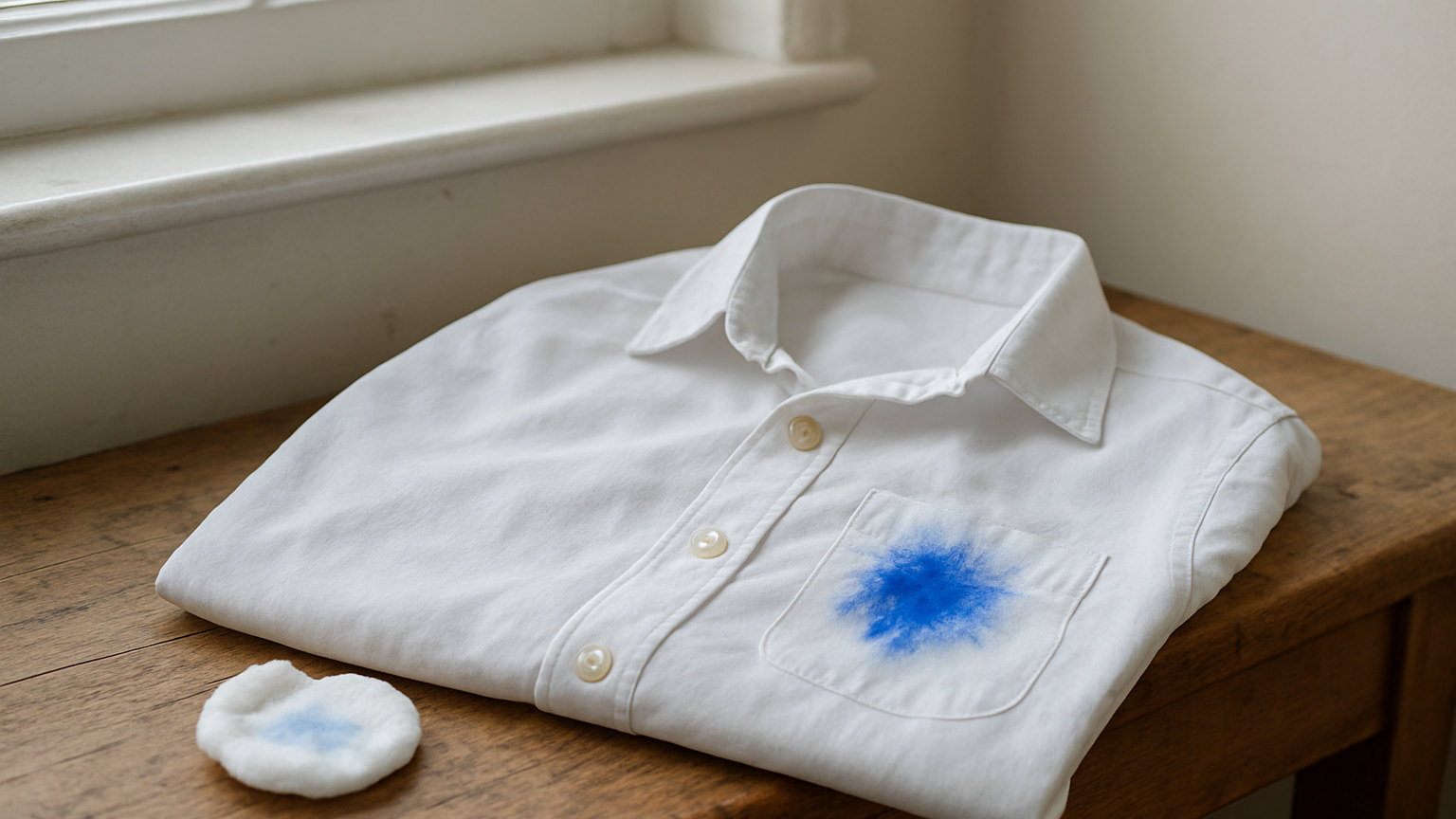
- Choose a genuinely hidden area: an inside seam allowance, a hem turnup or the inside of a cuff.
- Apply a small amount of the solvent with a cotton bud.
- Leave it for as long as you intend to use it on the stain.
- Blot with a white cloth and check for colour transfer.
- Let the area dry completely before judging it, since solvent looks darker while wet.
- Look at the fabric surface for any change in texture or sheen.
What are the safety points?
Ventilate the room, always. Keep solvents away from any flame or heat source, since most are flammable and some are highly so. Never mix two solvents, and never use a solvent on a garment that has already been treated with something else.
Wear gloves for anything stronger than surgical spirit, and never put a solvent treated item in a tumble dryer, which is a genuine fire risk.
What is the sensible order?
Start with the mildest thing that could work and escalate only if it fails. Washing up liquid, then surgical spirit, then a eucalyptus or citrus product, then a stronger solvent as a last resort on robust fabric.
For anything valuable, silk, tailored or vintage, skip the escalation entirely and take it to a professional cleaner who has both the right solvents and the experience to judge the fabric.
How should solvents be stored?
Sealed, upright, in a cool place away from heat and out of reach of children. Most are flammable and all should be kept away from a boiler, a tumble dryer or anything with a pilot light. Keep them in original labelled containers rather than decanting, so that anyone else in the house knows what they are handling.