Printer ink and laser toner look similar on a shirt and behave completely differently. Inkjet ink is a liquid dye or pigment suspension. Toner is a dry plastic powder designed to melt and fuse under heat. Treating toner as though it were a liquid is the single most common way a recoverable mess becomes permanent.
What is the rule for toner?
Dry and cold, at every stage. Toner particles are thermoplastic, meaning they melt and bond to the fibre when warmed. Warm water, a hot wash or a tumble dryer will fuse the powder into the fabric exactly as a printer fuses it onto paper.
- Do not brush, wipe or rub. Take the garment outside first.
- Shake the loose powder off, away from yourself and away from anything else.
- Vacuum the remainder with the nozzle held slightly off the surface rather than pressed on.
- Rinse under cold running water from the reverse side, for several minutes.
- Wash on a cold cycle with a normal detergent dose.
- Air dry and check. Never tumble dry until it is clear.
Why should you not brush toner?
Because the particles are extremely fine and static charged, so brushing drives them into the weave and spreads them across a much wider area. Shaking and vacuuming remove them while they are still sitting on the surface.
The same applies to skin and hard surfaces: lift the powder off rather than smearing it.
What is the method for inkjet ink?
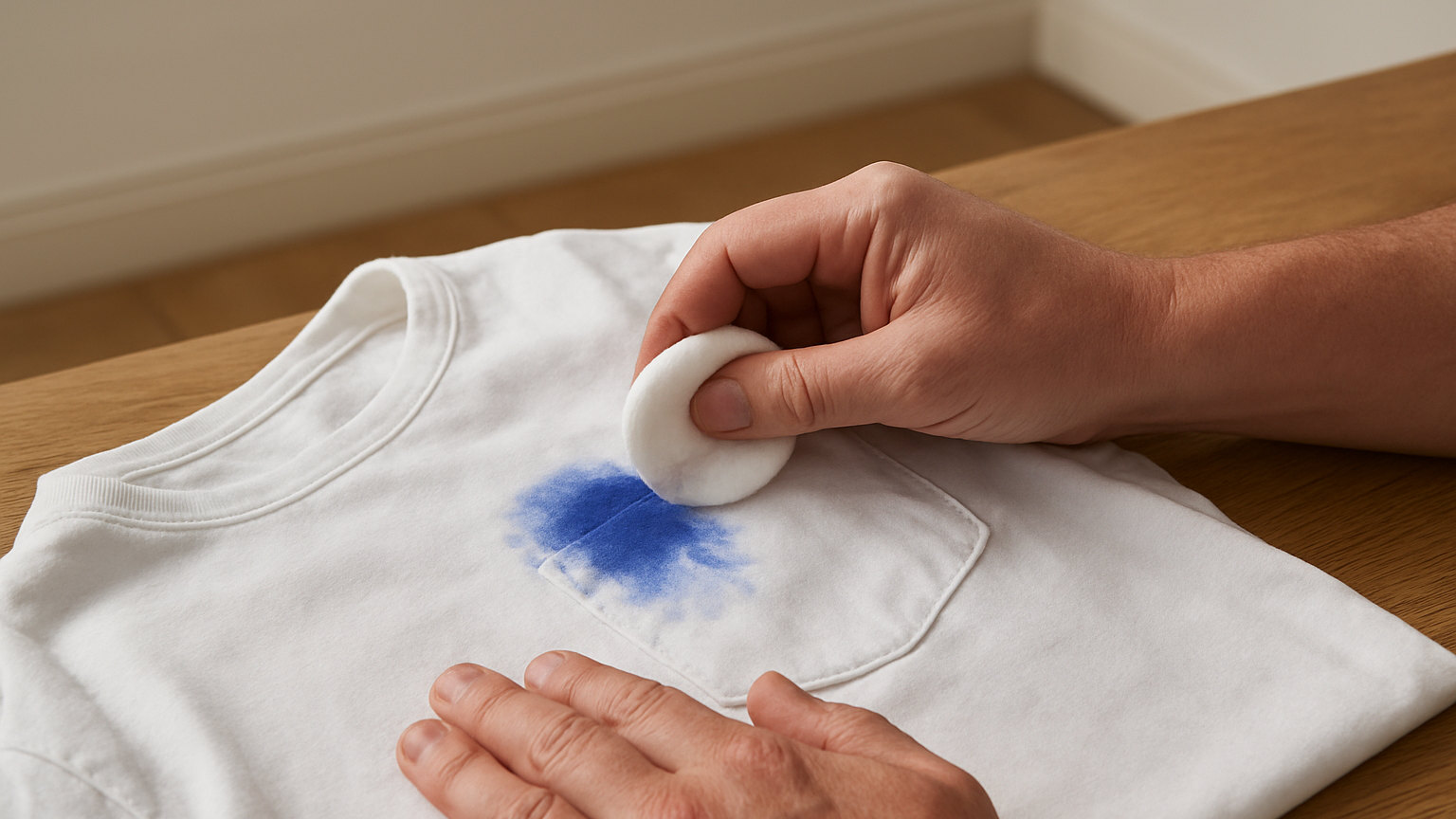
Treat it as a dye stain. Rinse under cold running water from the back until the water runs clear, then apply washing up liquid and leave it ten minutes. For what remains, dab with surgical spirit over a pad of absorbent paper, working from the reverse.
Follow with a normal wash and check before drying. On white cotton, an oxygen bleach soak clears most of what survives.
Pigment based inkjet inks, used in many photo printers, are more stubborn than dye based ones and may only reduce to a shadow.
What if a cartridge has leaked in a bag?
Deal with the bag before the contents. Remove everything, shake out any toner outdoors, and vacuum the interior. For inkjet, blot the lining and treat it as a fabric stain, working from the inside where possible.
Check anything the cartridge touched, since ink transfers readily onto paper, phone cases and other fabric.
What about toner on carpet?
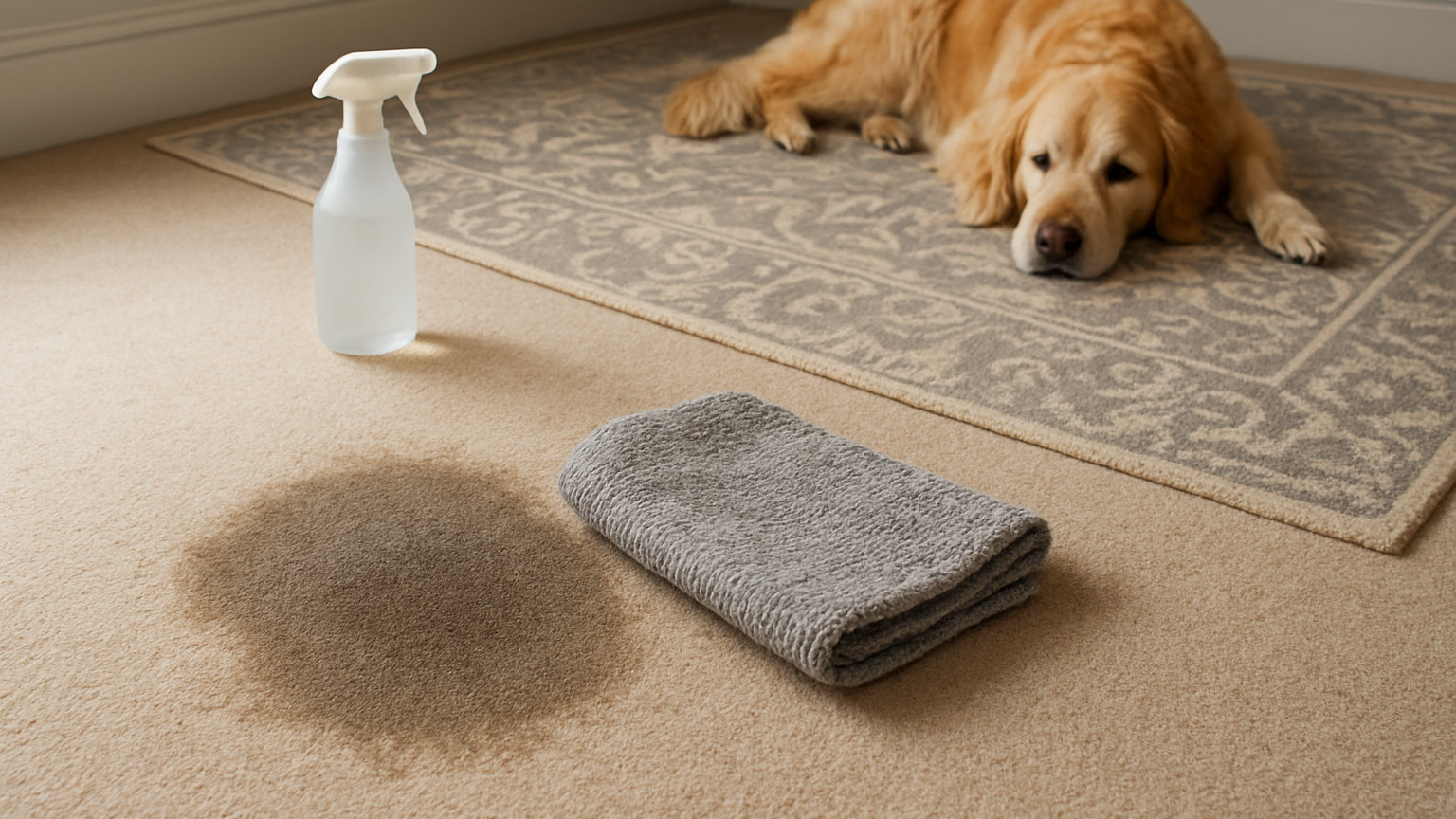
Vacuum first, thoroughly, with the nozzle just above the pile so the airflow lifts the powder rather than pressing it in. Use a vacuum you are prepared to clean afterwards, since fine toner passes through ordinary filters and can discolour the exhaust.
Then blot with a cloth dampened in cold water only. No warm water, no steam cleaner, and no heat of any kind until the powder has gone.
What about hands and skin?
Cold water and soap. Warm water fuses toner onto skin and makes it far harder to remove. It is not harmful in ordinary contact, though the powder should not be inhaled, and a spill large enough to become airborne is worth ventilating the room for.
What protective steps are worth taking?
Change cartridges over a surface that can be wiped rather than over carpet, keep the old cartridge in a bag, and wash hands before touching anything else. Most printer ink damage in homes happens in the thirty seconds after a cartridge is removed.
What if it has already been washed warm?
For toner, the outlook is poor, since the powder has fused. Try a solvent such as surgical spirit dabbed from the reverse over absorbent paper, which occasionally softens the plastic enough to lift some of it.
For inkjet ink, repeated oxygen bleach soaks on white cotton often produce gradual improvement. On coloured or synthetic fabric, a heat set printer ink stain is usually permanent.
Should the vacuum be cleaned afterwards?
Yes, and it is easily forgotten. Toner particles are fine enough to pass through ordinary vacuum filters and can be blown back into the room through the exhaust, or transferred onto the next carpet the machine is used on. Empty the cylinder or change the bag outdoors and wash the filters before using it again.