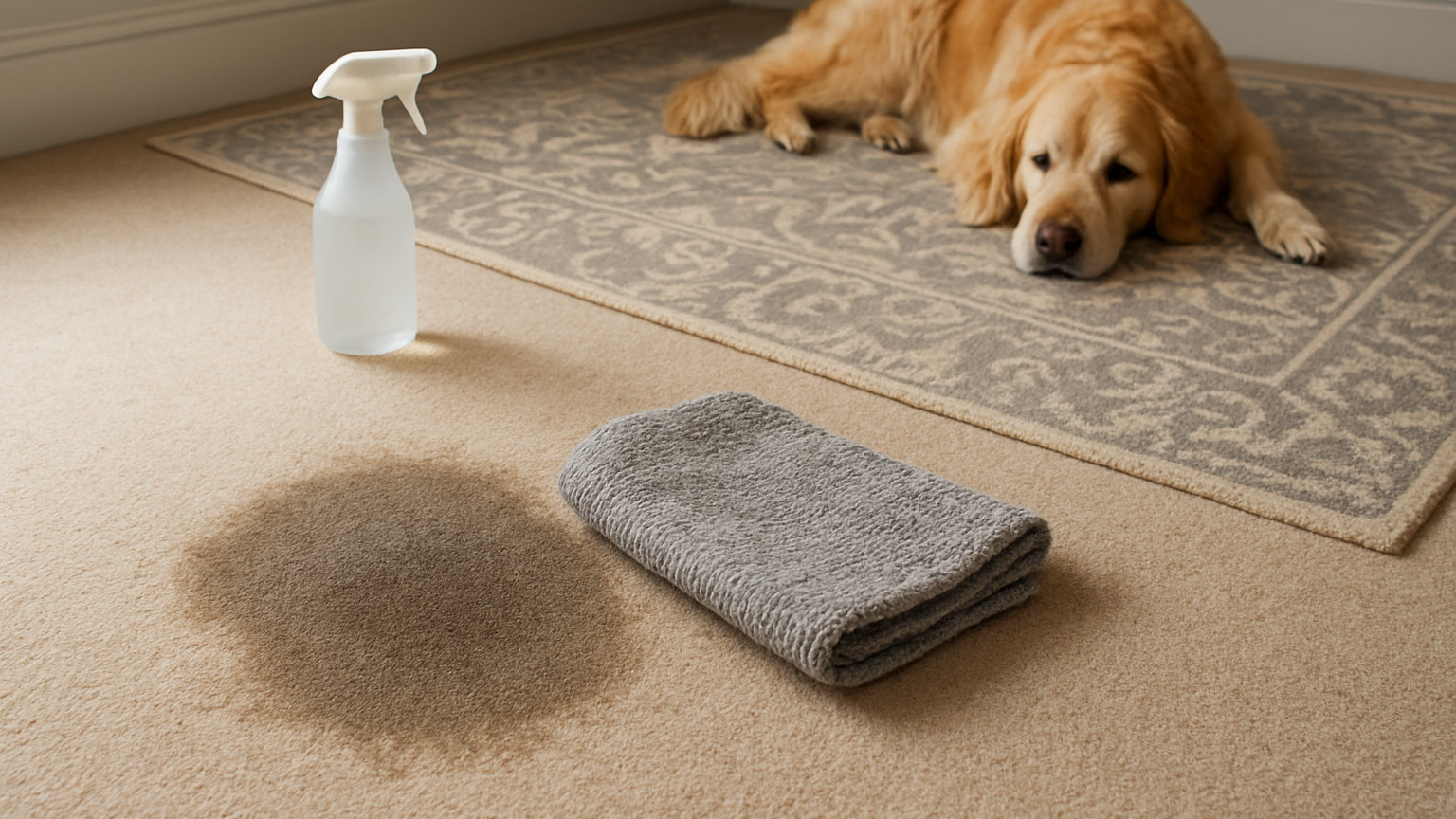
Carpet stains are harder than clothing stains for one structural reason: you cannot rinse a carpet. Every treatment puts liquid in, and whatever goes in has to be drawn back out or it carries the stain down into the backing and the underlay, where it will reappear later.
What is the correct sequence?
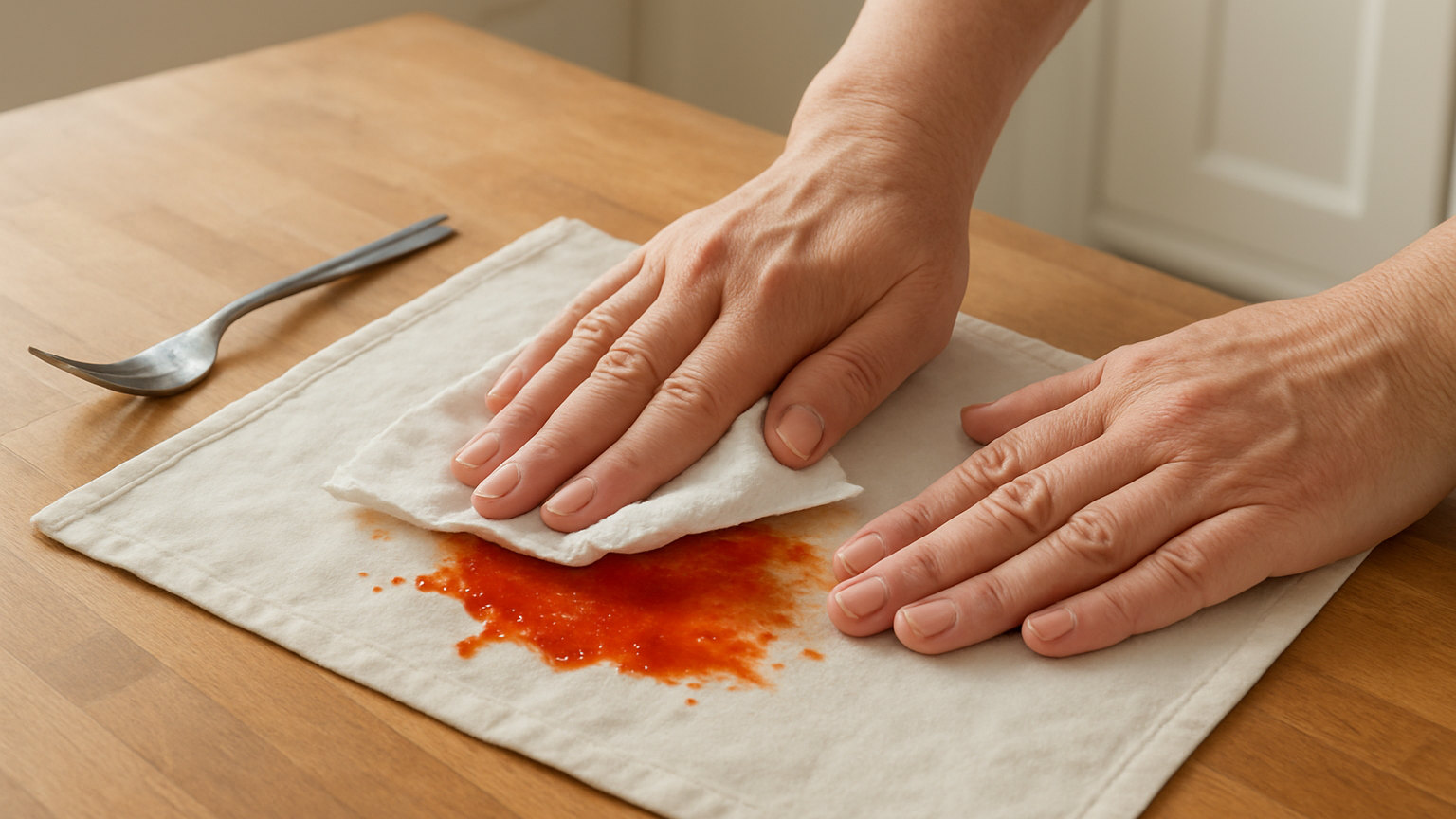
- Lift off solids with a blunt edge, scraping towards the middle of the mark.
- Blot the liquid with dry towels, pressing hard and standing on them if necessary.
- Keep moving to dry sections until little further transfers.
- Apply the treatment to a cloth, not to the carpet, and dab from the outside of the mark inwards.
- Blot again with a clean dry cloth.
- Rinse by blotting with a cloth dampened in clean water.
- Press a dry towel down under weight for several hours to extract the moisture.
- Dry quickly with a fan or an open window.
Why does the treatment go on the cloth?
Because pouring liquid onto carpet drives the stain into the backing and creates a wet area far larger than the original mark. Applying it to a cloth gives you control over how much goes in, which is the whole difficulty with carpet.
Work from the outside inwards for the same reason: it stops the mark spreading into a ring that is larger and more visible than what you started with.
What is wicking, and how do you prevent it?
Wicking is when a stain reappears a day or two after being treated. Residue that soaked down into the backing travels back up the fibres as the carpet dries, and the mark returns as a faint outline.
The remedy is extraction and speed. Press a dry towel down under a weight such as a heavy book for several hours, which pulls the moisture back up into the towel rather than letting it evaporate upwards through the pile. Then dry the area fast with a fan.
If a stain does wick back, treat it again and extract more thoroughly rather than assuming the first attempt failed.
Which treatment for which food?
- Greasy foods – warm water with a drop of washing up liquid.
- Protein foods such as milk, egg and gravy – cold water first, then an enzyme cleaner.
- Fruit, wine and tannins – cold water, then a carpet stain remover suitable for the fibre.
- Chocolate – freeze and lift the solids first, then detergent.
- Sugar and syrup – warm water, repeated until the stickiness has gone.
- Curry and turmeric – detergent for the oil, then a proprietary remover, and expect a shadow.
Why does an enzyme cleaner matter?
For anything protein based, because the residue that soaks into the backing will smell later even if the visible mark has gone. An enzyme cleaner continues to break the material down wherever the liquid reached, which detergent cannot do.
Apply it generously enough to cover the same area the spill did, which is wider than the visible stain.
What should you never do?
Rub, which damages the pile permanently and spreads the stain. Use hot water on protein stains. Use a steam cleaner before the stain has been removed, since heat sets it. Or use a coloured cloth, which can transfer its own dye into damp carpet.
Test any product on an offcut or in a hidden corner before using it on a visible area.
What about wool carpet?
Wool needs more care. Avoid alkaline products, oxygen bleach and anything strongly acidic, all of which damage the fibre or affect the dye. Use a wool safe carpet cleaner, keep the moisture minimal and dry quickly. When in doubt on a wool carpet, a professional is cheaper than a bleached patch.
When should you call someone in?
For a large spill, for anything that has soaked into the underlay, for wool and natural fibre carpets, and for a stain that has wicked back twice. Professional extraction removes the water it puts in, which is the one thing a cloth and a bowl cannot do.