Steam works best where dirt is held in a texture, a crevice or a pore, because the heat and moisture penetrate where a cloth cannot. On a smooth surface a cloth and a spray usually do the job faster; on anything textured, steam is genuinely better.
Where does it excel?
- Grout lines and textured tiles, where dirt sits below the surface.
- Bathroom corners, seals and awkward junctions.
- Window and door tracks, which collect compacted grime.
- Oven interiors and extractor hoods, for softening baked grease.
- Taps and shower fittings, around the base and the joints.
- Anti slip and riven floor tiles.
- Kitchen cupboard doors and handles with greasy build up.
What about kitchens?
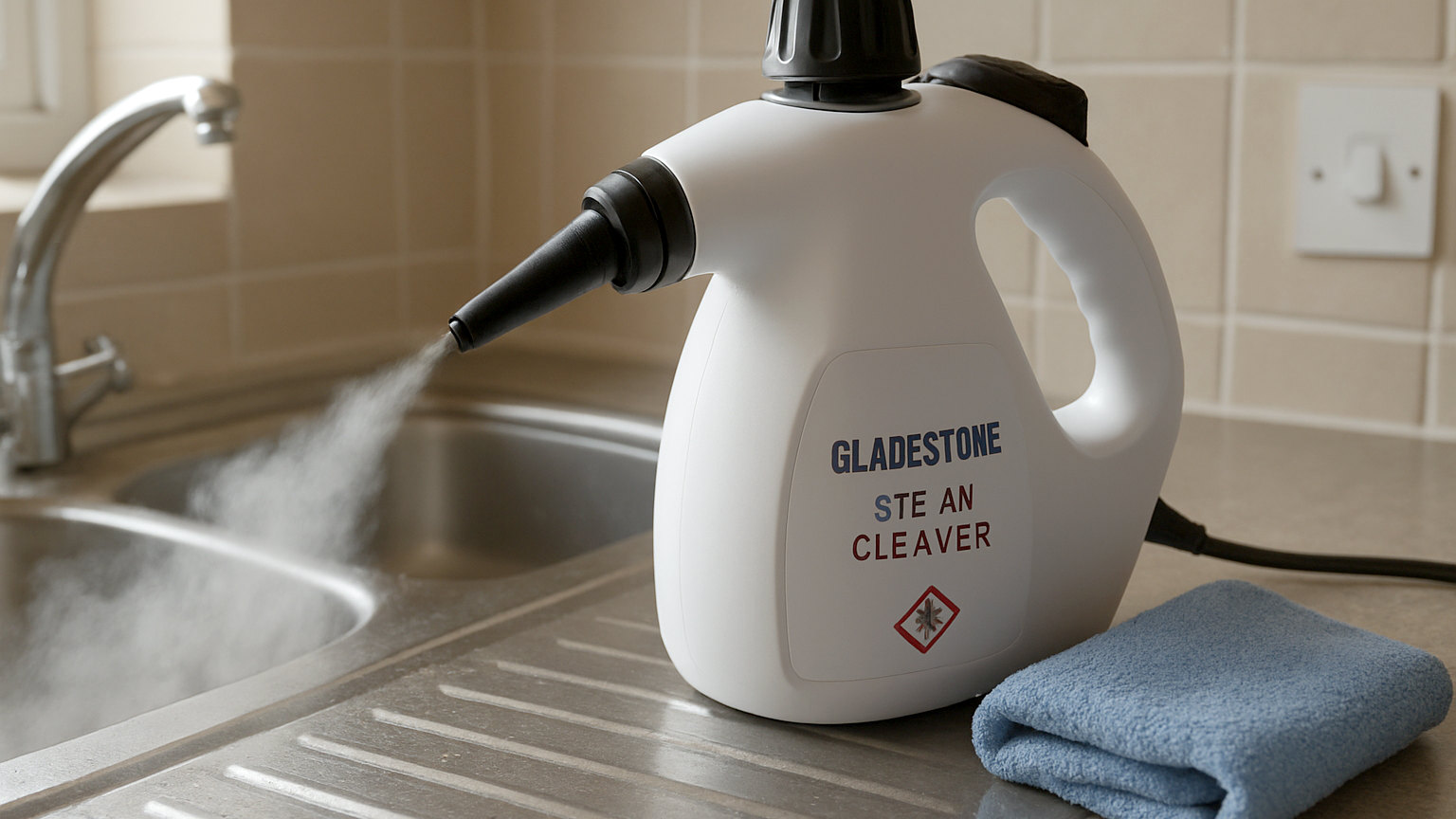
Steam softens baked grease very effectively, which makes it useful on oven interiors, extractor hoods, hobs and the tops of kitchen units where greasy dust accumulates.
It is a softening step rather than a complete answer on heavy deposits, and combining steam with a degreaser works considerably better than either alone.
It is also excellent for the small awkward places: behind taps, around the edge of a sink, in the gap beside a cooker.
What about bathrooms?
One of its strongest areas. Steam cuts soap scum well, reaches into the seal around a bath, cleans shower screen runners and kills surface mould on tile and silicone.
It does not remove limescale, which is a mineral deposit needing acid, and it does soften it enough to make the acid treatment easier.
What about floors?
Sealed hard floors, yes: tile, sealed stone, vinyl and linoleum all steam well. Textured and anti slip floors benefit most, since steam penetrates the texture that a mop glides over.
Laminate and wood are a different question and are covered separately, since both can be damaged.
What about soft furnishings?
Useful with care. Steam refreshes upholstery, curtains and mattresses, kills surface bacteria and dust mites where the heat reaches, and helps lift odours.
Use an upholstery tool with a cloth cover, keep the nozzle moving, and be aware that it introduces moisture that has to dry. Check the cleaning code first, since an S coded fabric will mark.
What about garments?
Many machines come with a garment tool for removing creases, which works well on hanging clothes and curtains. It is gentler than an iron for delicate fabrics and it is not a substitute for pressing where a sharp finish is wanted.
What else is it genuinely good for?
- Toilets, including the hinges and the base where cleaning is unpleasant.
- Bins, inside and out.
- Car interiors, particularly vents and seams.
- Barbecue grills and outdoor furniture.
- Removing old wallpaper, with the right attachment.
- Freeing a frozen or stiff mechanism such as a window runner.
Where is it not the best tool?
Large flat surfaces, where a cloth and a spray is quicker. Anything needing bleaching or stain removal. Limescale. Carpet, where hot water extraction does a genuinely different job. And any surface that moisture damages.
What is the one thing that makes it work?
Wiping immediately afterwards. Steam loosens dirt and leaves it on the surface, and unless it is removed with a cloth it dries back in place. Working in small sections with a cloth in the other hand is the method that gets results.
How long does a job take?
Longer than spraying and wiping, and the result on textured surfaces is better. A bathroom done thoroughly with a detail nozzle takes twenty to thirty minutes rather than ten. Where the surface is smooth and lightly soiled, a cloth and a spray is faster and there is no advantage in using steam at all.
Does it help with smells?
Where the smell comes from residue that the heat can reach, yes. Bins, drains around a plughole, pet areas and upholstery all benefit. Where the source is deeper, such as a spill that has soaked into carpet backing, steam reaches the surface only and an enzyme cleaner does more.