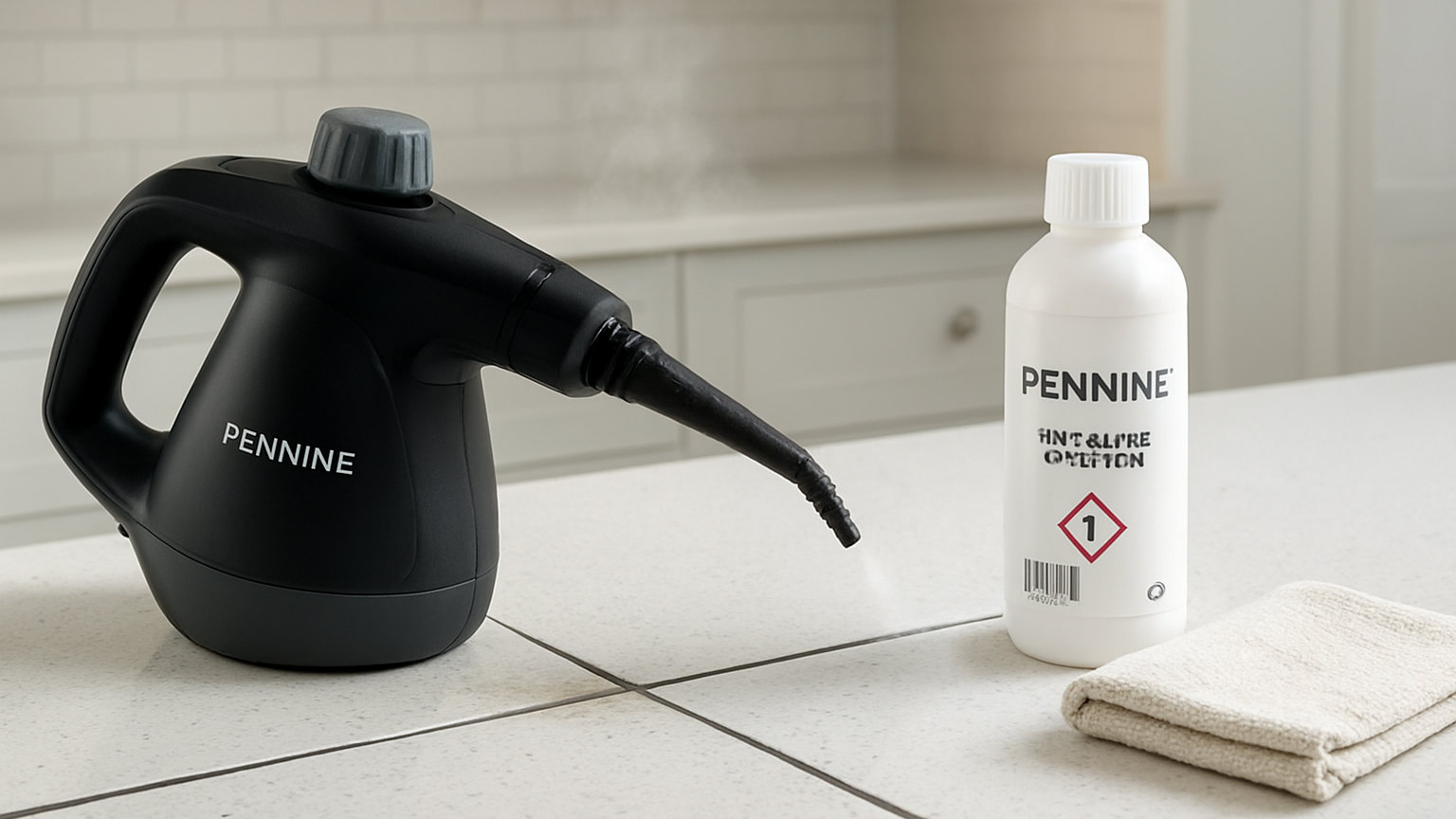
A steam cleaner produces steam at or above boiling point under pressure. It is a genuinely useful tool and it carries real hazards, and the two that catch people out are scalding at the nozzle and the pressure in the boiler when refilling.
What is the scald risk?
Steam causes worse burns than boiling water at the same temperature, because it releases a large amount of additional heat as it condenses on the skin. A brief exposure is enough to cause a serious scald.
Never direct the nozzle at any person or animal. Never test it with a hand. Keep fingers clear of the nozzle, and be aware that metal attachments stay hot for several minutes after use.
Use the trigger lock only when actively cleaning, and release it whenever you set the machine down.
What is the refilling risk?
On a pressurised boiler machine, the cap must not be opened while the boiler is hot and under pressure. Doing so can release a violent burst of steam and hot water.
Switch off, unplug, release the pressure through the trigger until no steam comes out, and let the machine cool for the time stated in the manual before opening the cap. Most machines have a safety cap that will not open under pressure, and it should not be forced.
What are the electrical precautions?
Water and electricity together, so treat it accordingly. Never immerse the machine. Never steam sockets, switches, appliance controls or screens. Keep the cord away from the steam and away from wet floors.
Cover or switch off any socket near a floor being steamed. Unplug before filling, emptying, changing attachments or cleaning.
What should you do about ventilation?
Open a window. Steam cleaning releases a considerable amount of moisture into a room, which raises the humidity and can cause condensation on cold surfaces.
In a bathroom, run the extractor. In a bedroom or a small room, ventilate afterwards until the surfaces have dried, or the moisture simply moves to the coldest wall.
What precautions matter around children and pets?
Keep them out of the room entirely while the machine is running and until surfaces have cooled. A hot floor, a hot nozzle and a trailing cord are all hazards, and a machine left unattended for a moment is exactly when an accident happens.
Store it out of reach and unplugged, and never leave it plugged in and heated while you are elsewhere.
What should you wear?
Closed shoes rather than bare feet or sandals, since steam runs downwards and floor surfaces get hot. Gloves for detail work close to the nozzle. Eye protection is sensible for overhead work such as extractor hoods.
What about the surface getting hot?
Glass can crack from thermal shock if steam is applied to a cold pane. Plastics can warp. Sealed surfaces can lift. Work from a distance and move closer gradually rather than applying full steam to one cold spot.
Move the nozzle continuously rather than holding it in one place, which concentrates the heat.
What is the safe working sequence?
- Fill with the machine cold and unplugged.
- Plug in, switch on and wait for the ready indicator.
- Purge the first burst into a cloth, since it carries condensed water.
- Work in sections, wiping as you go.
- Release the trigger whenever you pause.
- Switch off, unplug and let it cool fully before emptying.
- Empty the boiler after use and store it dry.
What should never be put in the tank?
Detergent, vinegar, bleach, essential oils or any additive, unless the machine has a separate compartment designed for it. They damage the boiler and the seals, and heated they can produce fumes.
Plain water only, and distilled or filtered water in a hard water area.
What should you do if steam contacts skin?
Cool the area under running cool water for at least twenty minutes, remove any clothing or jewellery near the area unless it is stuck to the skin, and cover loosely with cling film or a clean non-fluffy cloth. Do not apply creams or butter. Seek medical advice for anything larger than a small area, anything on the face or hands, or any blistering.