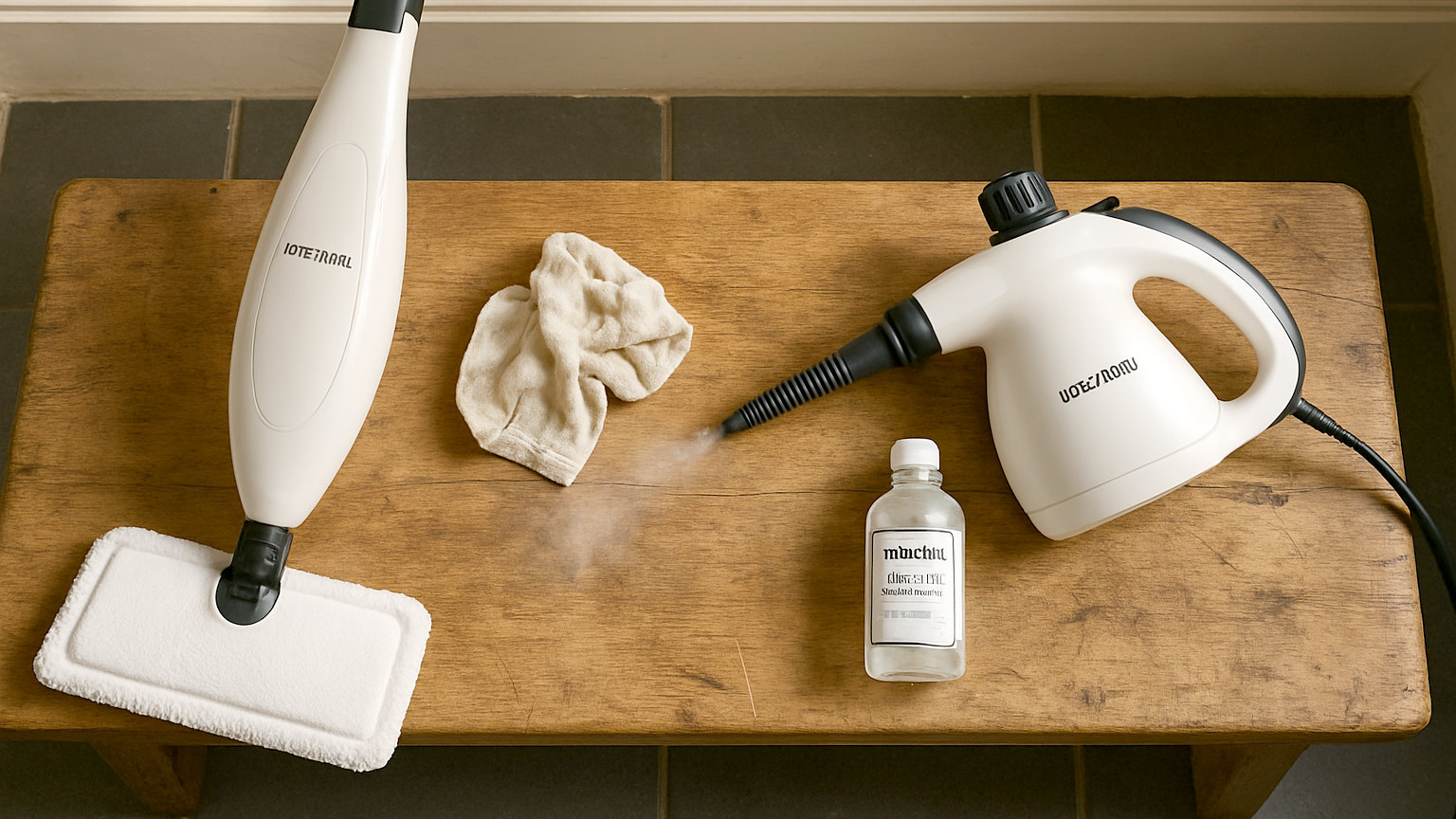
A steam mop is a small steam generator on a floor head with a washable pad. It heats quickly, uses very little water and leaves floors dry within a couple of minutes. It is genuinely convenient, and it suits a narrower range of floors than the advertising implies.
Which floors do they suit?
- Ceramic and porcelain tile – ideal.
- Sealed stone – usually fine, check the stone.
- Vinyl and linoleum – generally fine if the seams are sound.
- Sealed concrete – fine.
- Laminate – avoid, despite what some packaging says.
- Wood – avoid, or check the floor manufacturer guidance.
- Unsealed anything – avoid.
The laminate question is the one that matters most, since laminate is common and steam damage to it is permanent. Most laminate manufacturers advise against steam and many void warranties where it has been used.
Why does the pad matter more than the machine?
Because the pad does the removing. Steam loosens dirt and the pad picks it up, so a saturated or dirty pad simply pushes it around.
Change the pad partway through a floor rather than at the end. Most people use one pad for a whole house and then wonder why the result is mediocre.
Buy extra pads; they are inexpensive and having four or five available changes the result noticeably.
How do you wash the pads?
In the machine at sixty degrees with detergent and no fabric conditioner, which coats microfibre and destroys its ability to pick up. Air dry or tumble on low.
Rinse a heavily soiled pad under a tap before it goes in the wash.
What is the correct technique?
- Vacuum or sweep thoroughly first, which matters more than with a normal mop since grit gets dragged under the pad.
- Let the machine reach temperature fully.
- Work in overlapping passes, slowly.
- Pause on any stubborn area rather than scrubbing at it.
- Change the pad when it looks dirty.
- Let the floor dry, which takes a minute or two.
Do they clean better than a mop and bucket?
On tile and textured floors, generally yes, because the steam penetrates the texture and there is no dirty water being spread around. On smooth vinyl the difference is modest.
The clearest advantage is that there is no bucket of increasingly dirty water, which is the main weakness of traditional mopping.
Do they disinfect?
They reduce surface bacteria substantially where the heat reaches and dwells. Claims of killing a specific percentage depend on holding the surface at temperature for a defined time, which a mop passing over a floor does not do reliably.
Treat it as hygienic cleaning rather than disinfection.
What about detergent?
Most manufacturers say plain water only, and adding detergent to the tank damages the machine by clogging the boiler and the jets. Where a cleaning solution is wanted, some models have a separate compartment for it.
Never put vinegar, bleach or essential oils in the water tank.
What are the drawbacks?
The limited floor list. Short run times on smaller models. Pads that need constant changing on a dirty floor. Cords, on most models. And the risk of using one on a floor that should not have it.
Are they worth buying?
For a house with a lot of tile, a wet room or textured flooring, yes. For a house that is mostly laminate or wood, no, since the machine cannot be used on most of it. Check your floors before buying rather than after.
How long do floors take to dry?
A minute or two on tile, which is one of the genuine advantages over a mop and bucket. A wetter machine or a saturated pad leaves more moisture and takes longer. If a floor is still visibly wet several minutes later, the pad needs changing or the machine is producing wetter steam than it should.
Do they scratch floors?
Not the steam, and grit trapped under the pad will. Vacuuming or sweeping thoroughly first matters more with a steam mop than with a conventional one, because the pad is pressed firmly against the floor and drags anything caught in it across the surface.