Floors need very little. Most everyday floor soil is dust, grit and light grease, and hot water with a small amount of detergent handles it. The main mistake is using too much product, which leaves a film that attracts dirt and makes the floor progressively duller.
What is the general recipe?
- Fill a bucket with hot water.
- Add a few drops of washing up liquid, or a tablespoon of soda crystals for a greasy kitchen floor.
- Mix gently rather than creating foam.
- Wring the mop out well so it is damp rather than wet.
- Change the water as soon as it looks dirty.
Changing the water matters more than what is in it, since a dirty bucket means mopping with the dirt you have just collected.
What about vinegar on floors?
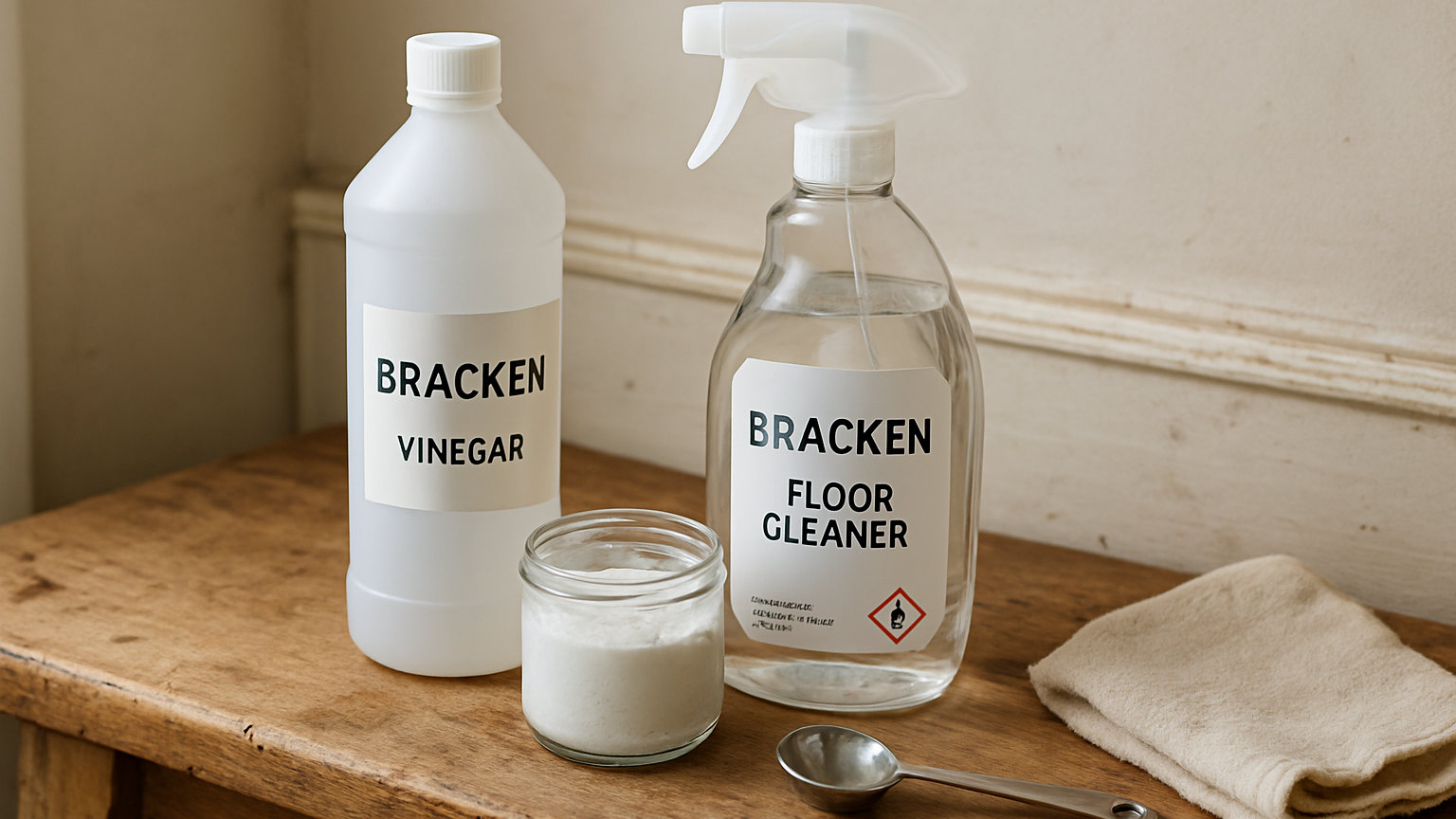
It suits sealed tile, vinyl and linoleum, at roughly half a cup to a bucket, and it helps in a hard water area by preventing the mineral film that dries onto the floor.
It must not be used on natural stone, which it etches, or routinely on cement grout, which it erodes. It is also widely advised against on wood, where it can dull the finish over time.
Which floors need what?
- Ceramic and porcelain tile – hot water, a little detergent, optionally vinegar.
- Vinyl and linoleum – hot water and a little detergent. Avoid excess water at seams.
- Sealed wood – barely damp mop, a wood floor cleaner or plain water. No vinegar, no soaking.
- Laminate – barely damp only. Water at the joints swells the core.
- Natural stone – pH neutral cleaner only. No vinegar, no bicarbonate, no soda crystals.
- Textured and anti slip tile – a stiff brush and an alkaline solution, then thorough rinsing.
How wet should the mop be?
Damp, not wet. Standing water is the main cause of damage on wood, laminate and at tile grout lines, and it also dries unevenly and causes streaking.
A flat microfibre mop with a spray bottle uses a fraction of the water of a string mop and gives a better finish.
Why does rinsing matter?
Because detergent left on a floor is sticky and attracts dirt, so the floor gets dirty faster after each clean. Over months this builds into a dull film that needs stripping.
Either use very little product, or go over the floor a second time with clean water only. On a small floor the second pass takes two minutes.
What strips a built up film?
A solution of soda crystals in hot water, applied, left ten minutes and scrubbed, then rinsed twice. It removes accumulated detergent residue and old polish.
Test in a corner first, and keep it off natural stone, wood and anything painted.
What about a scented floor cleaner?
A few drops of essential oil in the bucket gives a pleasant smell and contributes nothing to the cleaning. Keep oils away from homes with cats, which cannot metabolise many of them safely.
Adding citrus peel to a jar of vinegar for a fortnight gives a better smelling vinegar for the same purpose.
What should never go in the bucket?
Bleach alongside any acidic cleaner. Washing up liquid in large quantities, which foams and leaves residue. Fabric conditioner, which is sometimes suggested and leaves a slippery film. And oil based soaps on anything other than the specific floor they are made for.
What matters most of all?
Sweeping or vacuuming properly first. Grit dragged around by a mop scratches the floor and is pushed into grout lines, and no solution in the bucket compensates for skipping it.
What about a spray mop refill?
Most refillable spray mops take a homemade solution perfectly well, which avoids buying branded cartridges at a considerable markup. Use a weaker mix than you would in a bucket, since there is no rinsing stage to remove what is left behind, and make sure nothing in it will clog the nozzle. Plain water with a few drops of detergent suits most sealed floors.