Washing that comes out of the machine already smelling has usually picked the smell up rather than failed to lose one. A washing machine that is run exclusively on cool short cycles builds a film of detergent residue, fabric conditioner and lint in places that never get hot, and that film develops its own odour which transfers into every load.
Where does the smell actually live?
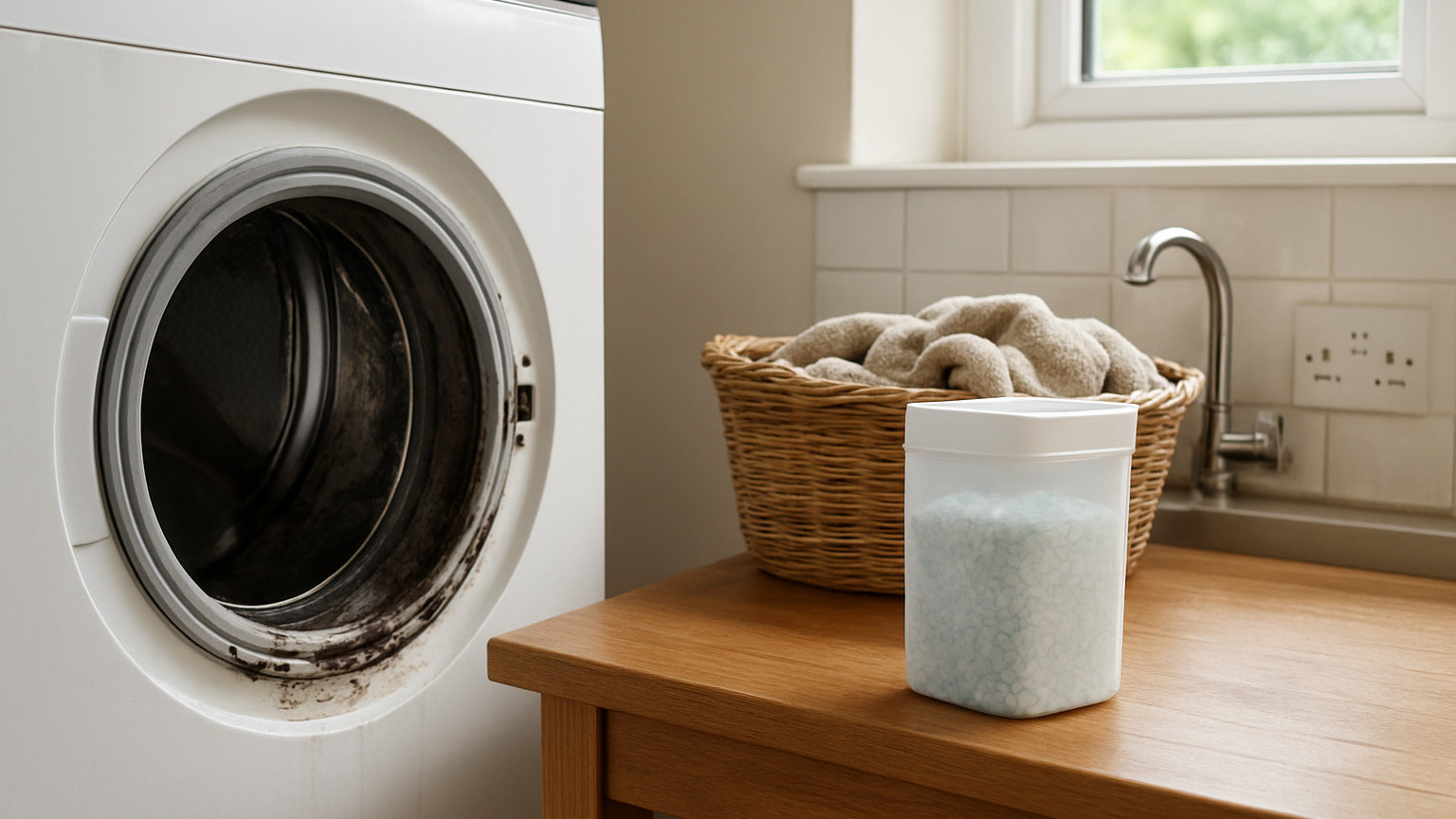
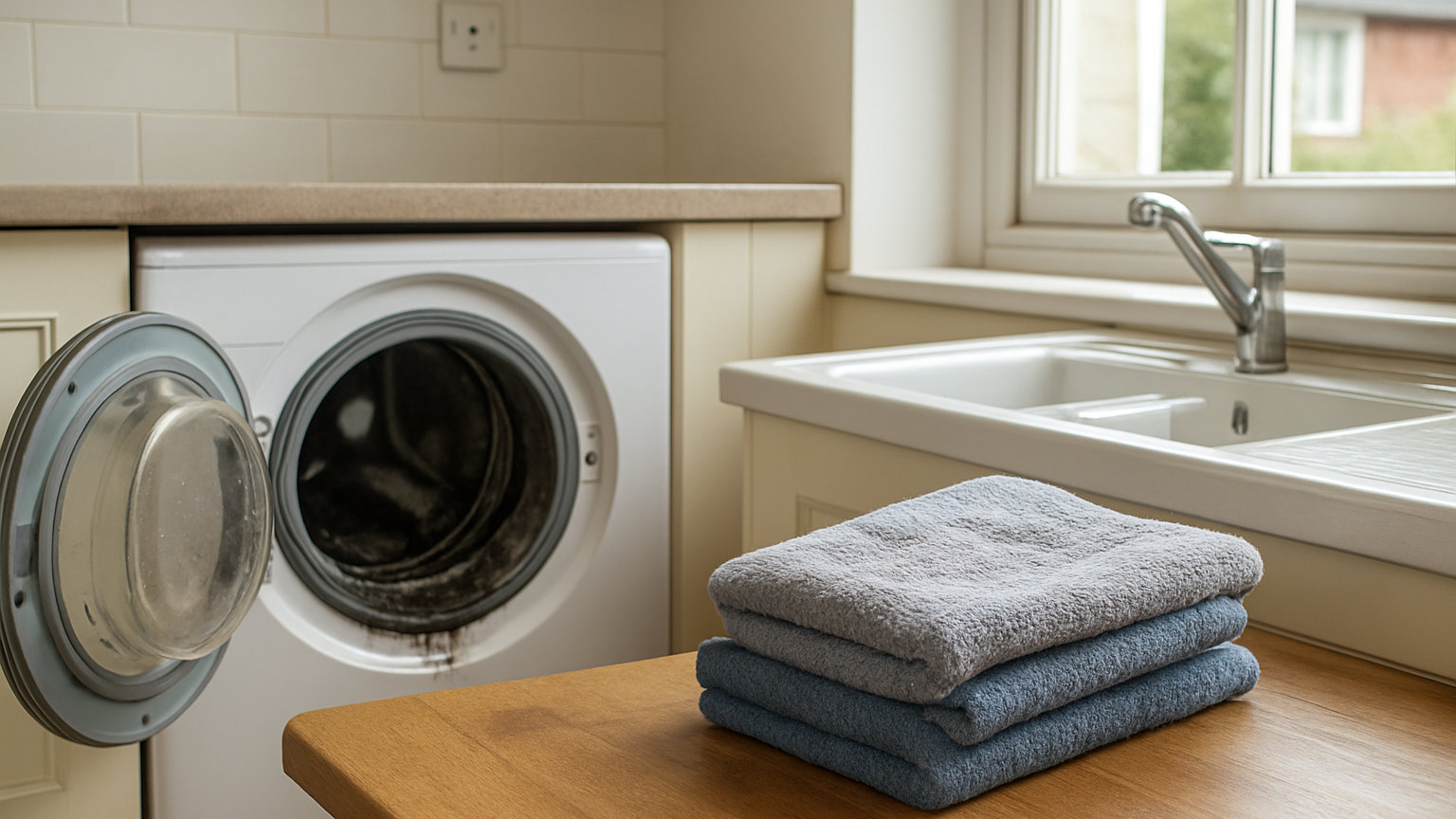
- Behind the lip of the door seal, where water, lint and hair collect and never dry.
- In the detergent drawer and the housing behind it, which is usually lined with grey sludge.
- In the filter at the bottom front of the machine.
- In the drain hose and the pump, where standing water sits between cycles.
- Under the drum lifters, where small items and residue lodge.
Pull back the door seal with a finger and look underneath. In most machines that have not been cleaned for a while, what is there explains the problem immediately.
Why do cool washes cause it?
Because nothing in the machine ever reaches a temperature that clears the residue. Washing at 30 is better for clothes and worse for the appliance, and a household that has switched entirely to 30 degrees will often notice a smell developing within a year.
Fabric conditioner makes it worse, since the waxy residue it leaves is exactly what the film is made of.
Could it be detergent residue in the fabric?
It frequently is, and this is the second cause. Too much detergent leaves a film in the fibres that holds moisture and feeds bacteria, so the clothes smell faintly stale even when the machine is clean.
Test it by running a load with no detergent at all and an extra rinse. If the clothes smell better afterwards, reduce the dose permanently. Most households use considerably more than they need.
Is the load sitting in the drum?
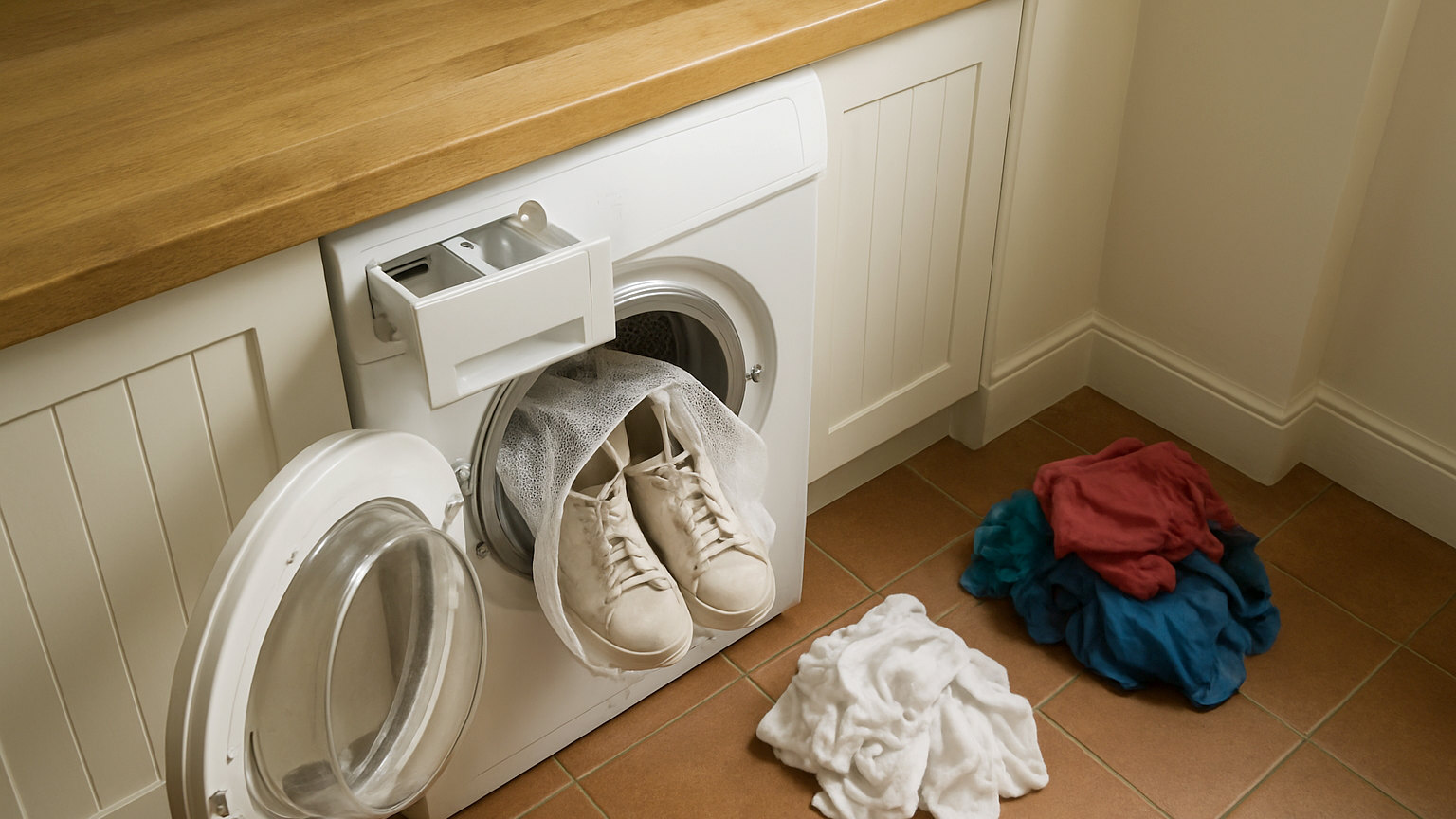
The third cause, and the simplest to fix. Damp washing left in a warm enclosed drum for a few hours begins to develop bacteria, and in summer that takes less time than people expect. The clothes come out smelling sour before they have even been dried.
Take the load out as soon as the cycle ends, or use the delay start so it finishes when you are there.
What about the drying?
Slow drying is the fourth cause. Fabric that stays damp for more than about a day at room temperature grows bacteria, and the smell develops while the washing is still on the airer. Spin at the highest speed the fabric allows, space items out, and use a fan or a dehumidifier if the room is cold.
How do you clean the machine?
- Run an empty cycle at 60 or 90 degrees with a proprietary machine cleaner, or a large dose of soda crystals.
- Remove the detergent drawer, wash it in hot soapy water and scrub the housing behind it.
- Wipe under the lip of the door seal thoroughly, all the way round, and dry it.
- Open the filter at the bottom front, drain it into a shallow tray and clean out what is there.
- Wipe the drum and the door glass.
- Leave the door and the drawer ajar afterwards so the drum can dry.
Repeat monthly, which prevents the problem returning.
Does it matter which detergent you use?
Powder detergents contain oxygen bleach and help keep the machine cleaner than liquids do, which is a genuine secondary benefit. A household using only liquid capsules on cool cycles with conditioner is running the combination most likely to produce a smell.
What if the smell persists after all of that?
Check the drain. A washing machine drain hose connected without a trap, or connected to a blocked waste, can allow drain odours back into the drum. A smell that is more like sewage than mustiness points that way rather than to anything in the machine itself, and it is worth having looked at.