Ironing is the least popular household job and the most avoidable. A large proportion of what ends up on the board could have been dealt with at the drying stage, and a fair amount of the rest does not need ironing at all. Working out which is which turns an hour long chore into fifteen minutes.
What genuinely benefits from ironing?
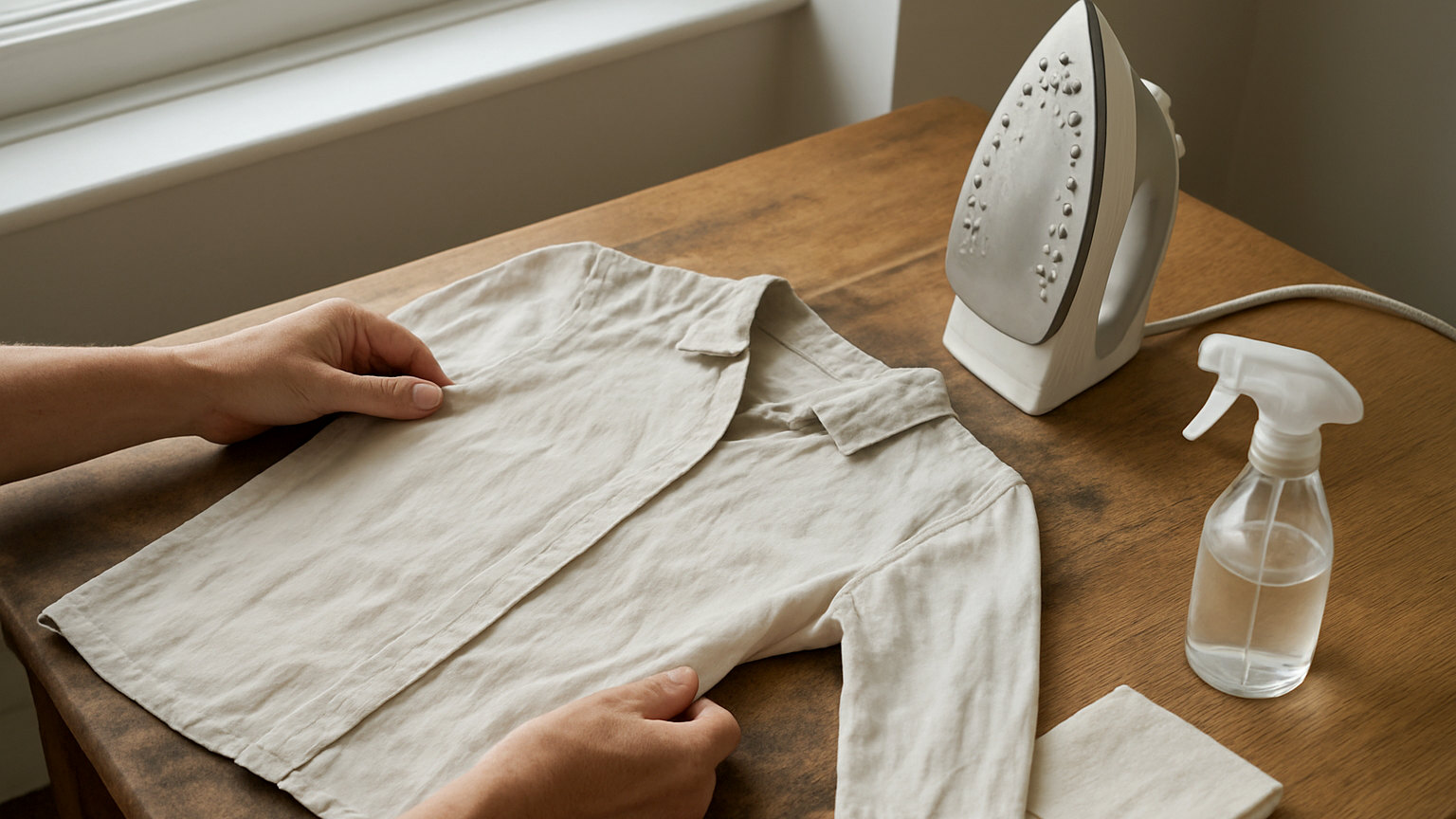
- Cotton and linen shirts, particularly the collar, cuffs and front placket.
- Linen anything, which creases severely and looks noticeably better pressed.
- Tailored trousers, where the crease is part of the garment.
- Anything for a formal occasion, where the standard is higher than everyday wear.
- Fabric that needs sharp edges to hang correctly, such as pleats and structured collars.
What does not need it?
Towels, which are softer without it and lose nothing to a crease. Bedding, in most households, particularly fitted sheets. Underwear and socks. Jeans and most denim. Jersey t-shirts, which lose their drape under an iron. Knitwear, which should be pressed lightly if at all and never slid over. Sportswear and anything with elastane. Most children clothes, which will be covered in something within an hour.
Anything made from polyester or a high polycotton blend generally comes out of a good drying routine flat enough to wear, which is exactly why those fabrics dominate workwear and uniforms.
How do you avoid the ironing in the first place?
- Use a lower spin speed for anything you would otherwise iron. The high speed spin is where most creases are set.
- Take the load out the moment the cycle ends. Damp clothes left folded in a drum set into their creases.
- Shake every item out firmly as you take it from the machine.
- Hang shirts on hangers to dry, buttoned at the collar, with the shoulders squared and the placket smoothed by hand.
- Do not overload the dryer, and take items out slightly damp to finish on a hanger.
- Fold or hang immediately once dry rather than leaving a basket of clean washing for three days.
Done consistently, this removes most shirts from the ironing pile entirely and leaves only the collar and cuffs needing attention.
What about a quick press instead?
For many garments a partial iron is enough. On a shirt worn under a jumper, only the collar and cuffs are visible. On a dress worn with a jacket, only the front. Ironing what shows takes a fraction of the time and nobody can tell the difference.
This feels like cheating and is simply proportionate to how the garment will actually be seen.
Does a steamer replace an iron?
For a lot of everyday clothing, yes. A handheld steamer relaxes creases in hanging garments in a minute or two and needs no board, which makes it far more likely to actually get used. It will not produce a sharp crease in trousers or a crisp collar, so it complements an iron rather than replacing it entirely.
For jersey, knitwear, curtains and anything that cannot take direct contact with a soleplate, a steamer is genuinely better than an iron rather than a compromise.
Do wardrobe habits make a difference?
A large one, and it is rarely considered. Clothes hung with space around them come out of a wardrobe uncreased; the same clothes crammed onto a full rail come out needing pressing every time. Fold knitwear rather than hanging it, and hang anything that creases readily. A wardrobe with a third fewer items in it produces noticeably less ironing without anything else changing.
What is a realistic standard?
Whatever suits the household rather than an inherited one. Plenty of people iron bedding, tea towels and underwear because that is how they were taught at home, and none of it is necessary by any practical measure. Deciding deliberately what you are going to iron, writing it down if it helps, and then simply not ironing the rest is the single largest saving available in the whole of laundry.