Wet wool is far heavier than dry wool, and the fibres are at their most vulnerable when saturated. Hanging a wet jumper means the weight of the water pulls down through the knit structure, stretching the body and the shoulders permanently. Drying flat is not fussiness; it is the only method that preserves the shape.
How do you get the water out?
Never by wringing or twisting, which breaks fibres and distorts the knit. The sequence is:
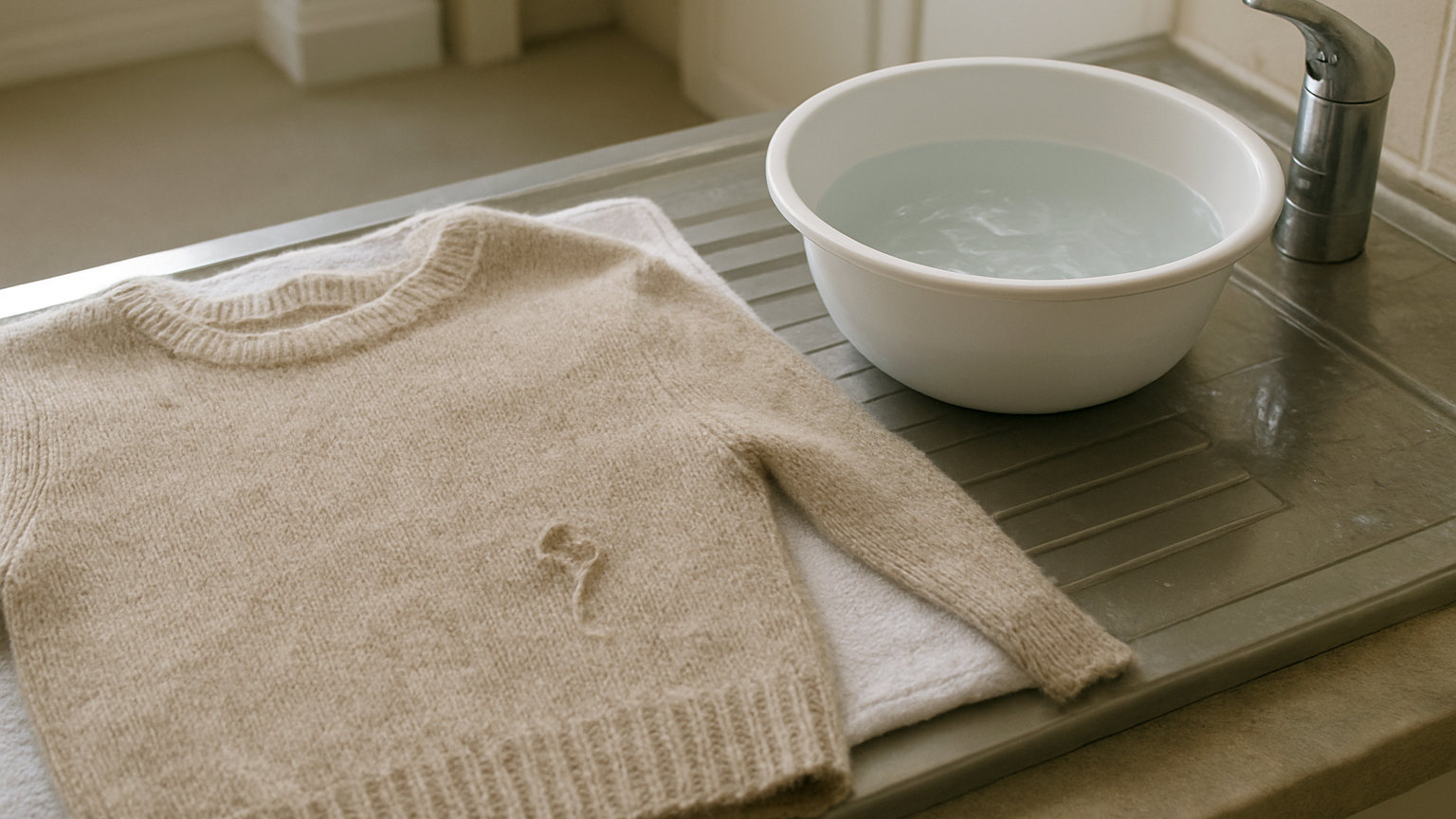
- Lift the garment out of the water supporting its full weight with both hands, so it does not stretch as it comes out.
- Press it gently against the side of the bowl to release the bulk of the water.
- Lay it flat on a large dry towel.
- Roll the towel up with the garment inside, like a Swiss roll.
- Press firmly along the roll, or kneel on it, so the towel absorbs the water.
- Unroll, move the garment to a second dry towel, and repeat if it is still very wet.
Two rounds of towel rolling removes a remarkable amount and cuts the drying time substantially.
Can a wool garment be spun?
A short, slow spin is acceptable for machine washable wool on a wool cycle, since the machine is designed for it. A fast spin is not, because the garment is pressed hard against the drum and creases and distortions set into it.
For hand washed items, towel rolling is safer than putting the garment in the machine at all.
How should it be laid out?
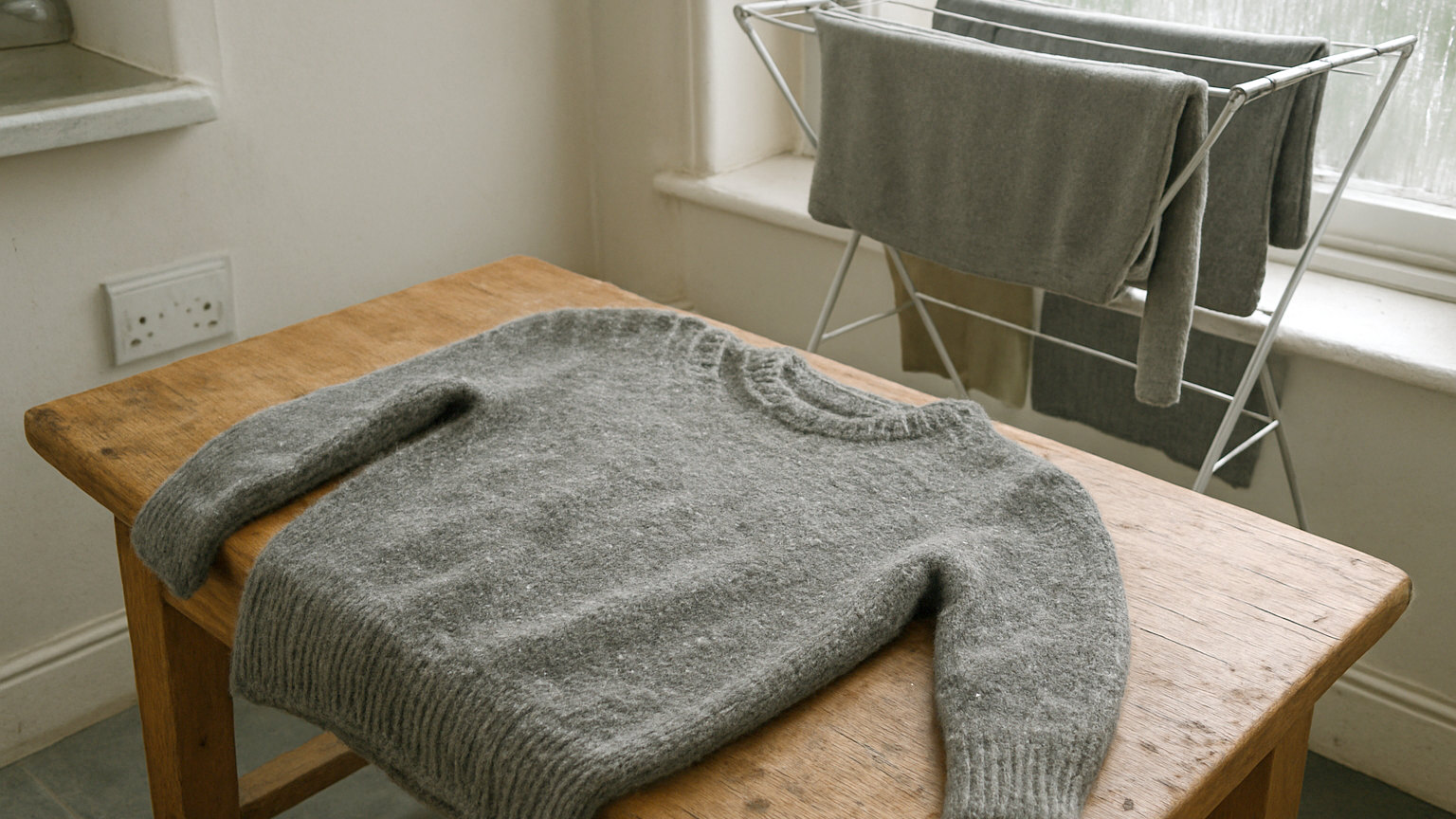
On a dry towel or a mesh drying rack, on a flat surface with air circulation. A mesh rack is better than a towel because air reaches both faces, which halves the drying time.
Reshape the garment by hand while it is damp, which is the moment when it will hold whatever shape you give it. Measure or eye the original dimensions, square up the shoulders, straighten the sleeves and pat the body out to width. Pay attention to ribbing at the cuffs and hem, which should be eased rather than stretched.
Turn the garment over halfway through drying, and replace the towel underneath if it has become damp.
Where should it dry?
Somewhere with air movement, away from direct sunlight and away from any heat source. Sunlight fades and yellows wool, and radiators and direct heat make the fibres brittle and can shrink the garment further.
A room with a window open, or a fan running on a low setting in the same room, speeds things considerably without applying heat.
How long does it take?
A day or two for a normal jumper, and longer for a thick cable knit or anything in chunky wool. Do not be tempted to speed it up with heat. Do not put it away until it is completely dry, since a jumper folded away damp will develop a smell and can grow mould in the fibres.
What about a garment that has already stretched?
Rewetting and redrying flat will usually recover a good deal of it. Soak the item in cool water with a wool detergent, remove the water by towel rolling, then lay it out and gently push the fabric back towards its original dimensions rather than pulling it. Wool has some memory, and patting it into shape while damp is surprisingly effective.
A garment that has stretched repeatedly, or one that has been hung wet many times, may not fully recover.
Is a tumble dryer ever acceptable?
Only for items specifically labelled as machine dryable, and then on the lowest heat with the item removed while still slightly damp and finished flat. For anything else the combination of heat and tumbling felts the fibres, and that is irreversible.
A cool air setting with no heat at all is sometimes used to fluff up a garment that is already dry, which is a different matter entirely and generally safe on most knitwear.