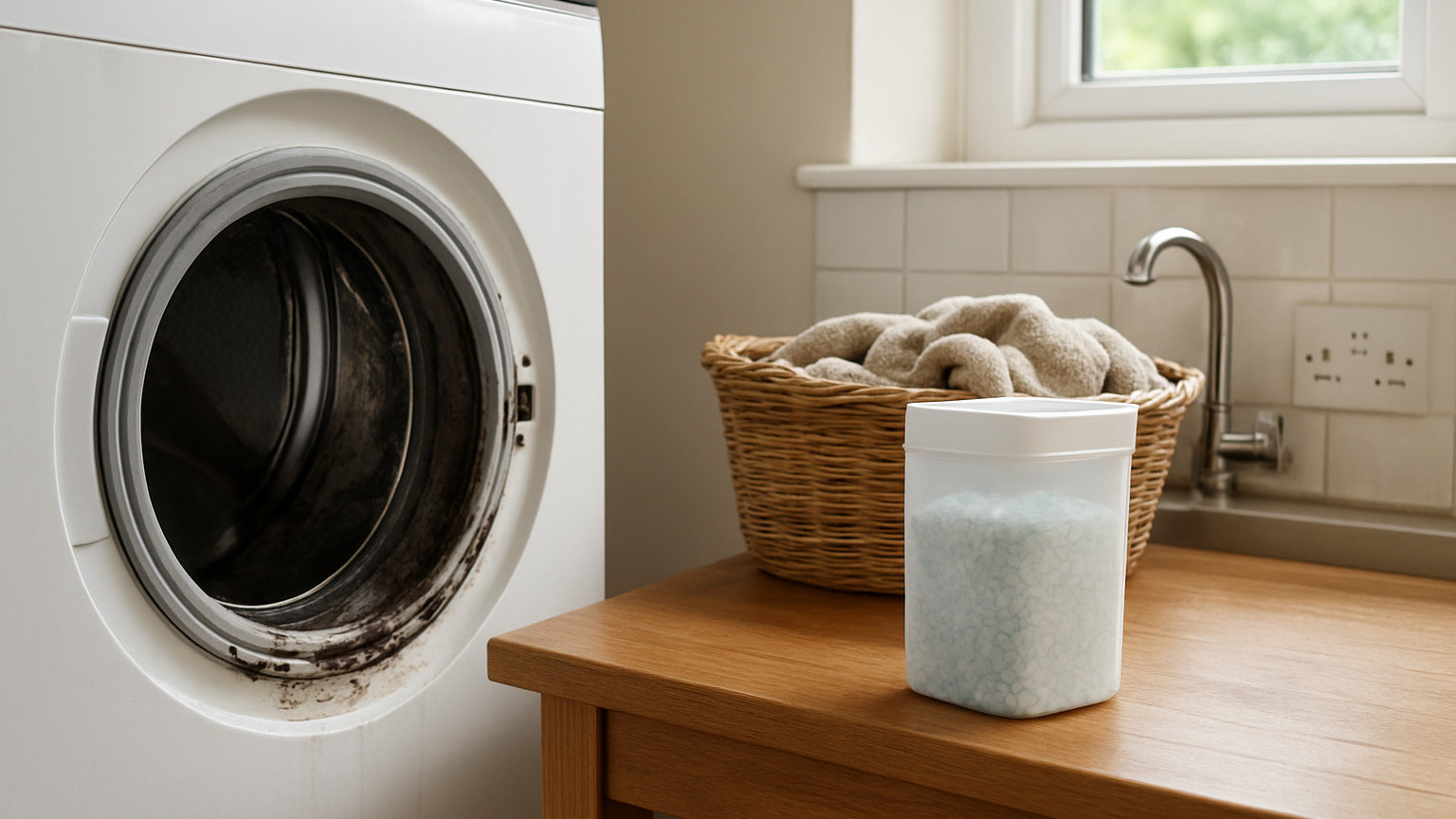
Delicate is not a single category and treating it as one leads to items being damaged in two quite different ways. Some garments are fragile because of what they are made from, and some because of how they are put together. A silk blouse and a beaded jacket both need care, and the reasons have almost nothing in common.
Which fibres are inherently delicate?
- Wool and cashmere – felt irreversibly with heat, moisture and agitation together.
- Silk – weakened by alkaline detergents, marked by water droplets, damaged by heat.
- Viscose and rayon – lose a great deal of strength when wet and can tear under their own weight.
- Acetate – melts at low temperatures and marks with water.
- Linen – strong but creases severely and can weaken at fold lines over years.
- Elastane blends – the elastic fibres degrade with heat well below what the outer fabric can take.
Which constructions are delicate regardless of fibre?
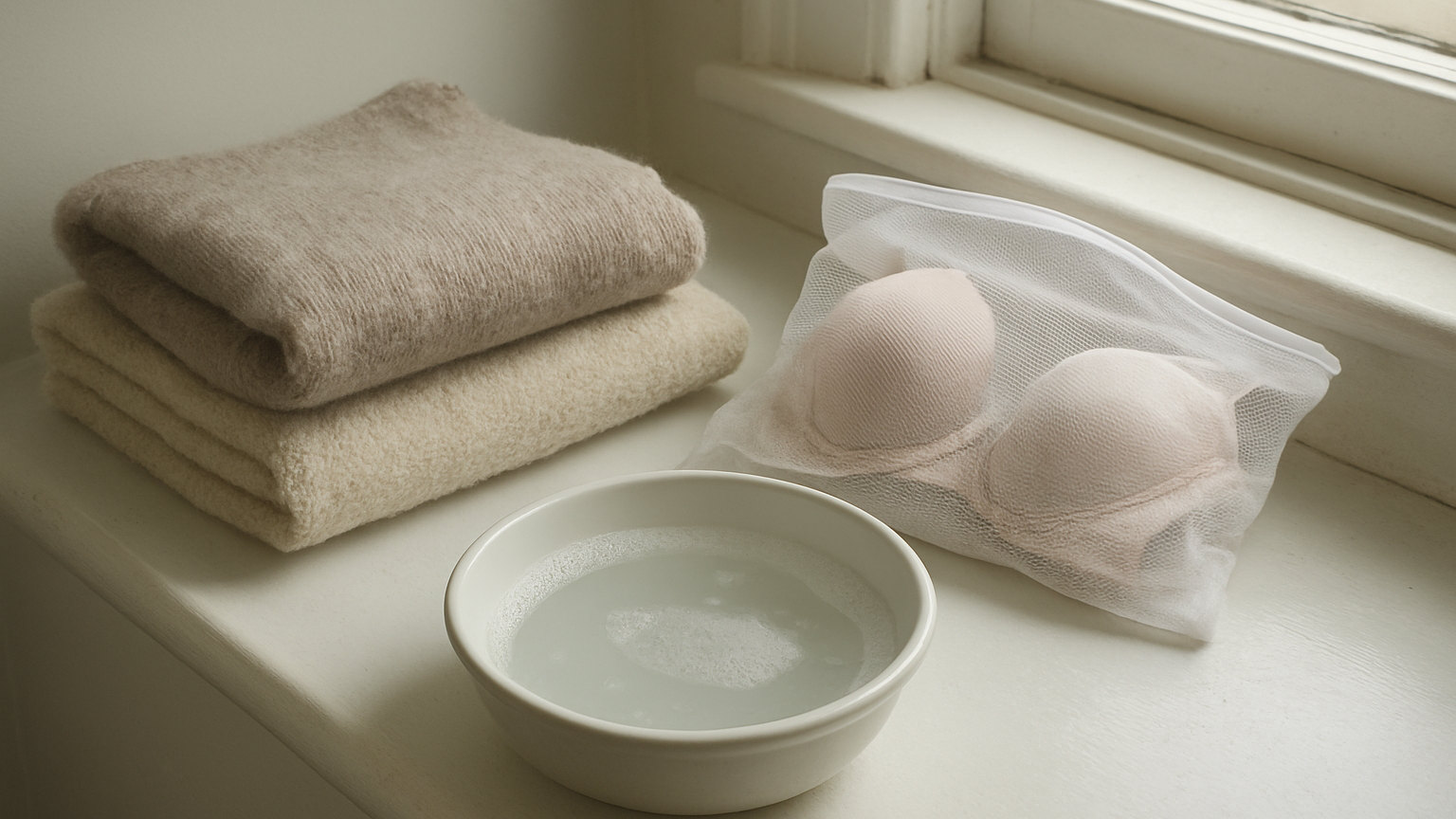
Anything with beading, sequins or applied decoration, where the attachment is the weak point. Lace, where the open structure catches on anything. Structured garments such as bras and tailored jackets, where interlinings, padding and wire move independently of the outer fabric. Loose knits, which stretch under their own weight when wet. Pleating, which washes out. And anything lined, where the lining and the outer shell shrink at different rates.
A polyester sequinned top is not made of a delicate fibre and is still a delicate garment.
How do you decide what needs special treatment?
The care label is the starting point, and three symbols matter most. A hand in a tub means hand wash. A tub with a number and one or two bars underneath indicates a reduced or gentle machine cycle. A crossed out tub means do not wash at all.
Beyond the label, ask three questions. Would this hold its shape if it were soaking wet and hanging from one corner? Would a zip or a stud on another garment catch on it? Would a spin at 1200rpm crush or distort it? A yes to any of those means it belongs in the delicates pile.
What if there is no label?
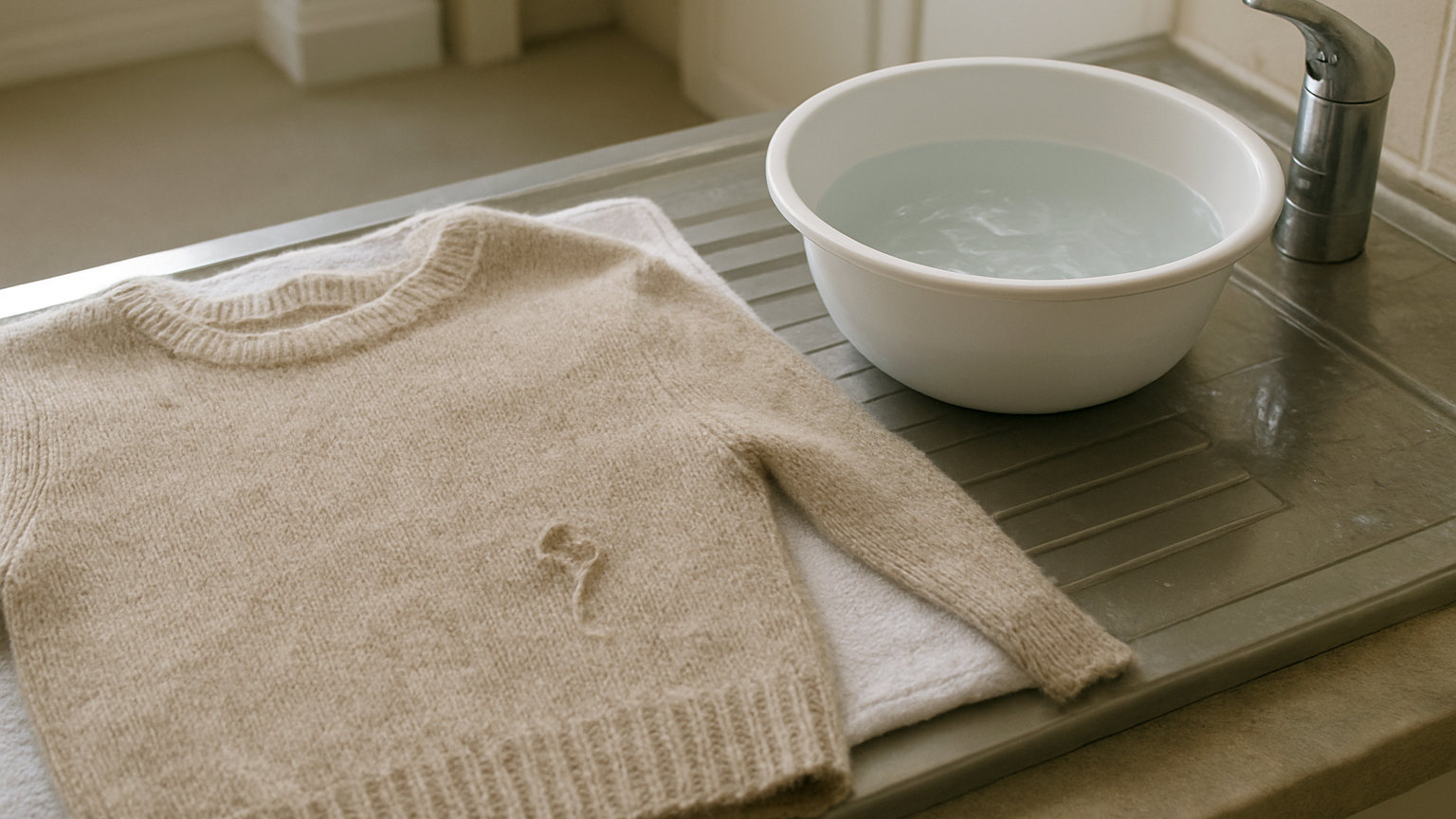
Assume the most cautious treatment. Hand wash cool, minimal agitation, no spin, dry flat. You can always be less careful next time; you cannot undo a felted jumper.
Feel the fabric as a guide. Smooth, cool and slippery suggests silk or acetate. Slightly springy with visible texture suggests wool. Soft and drapey with a dry feel is often viscose, which is the one most people underestimate.
Does delicate always mean hand washing?
No, and modern machines have narrowed the gap considerably. A proper wool or hand wash cycle rocks the drum rather than tumbling it, uses more water and barely spins, and it is often gentler than a person washing by hand who rubs and wrings without thinking.
The items that genuinely need hands are the ones a machine cannot protect: heavy embellishment, vintage textiles, anything with a weak seam, and anything where you would not risk being wrong.
What makes the biggest difference for machine washed delicates?
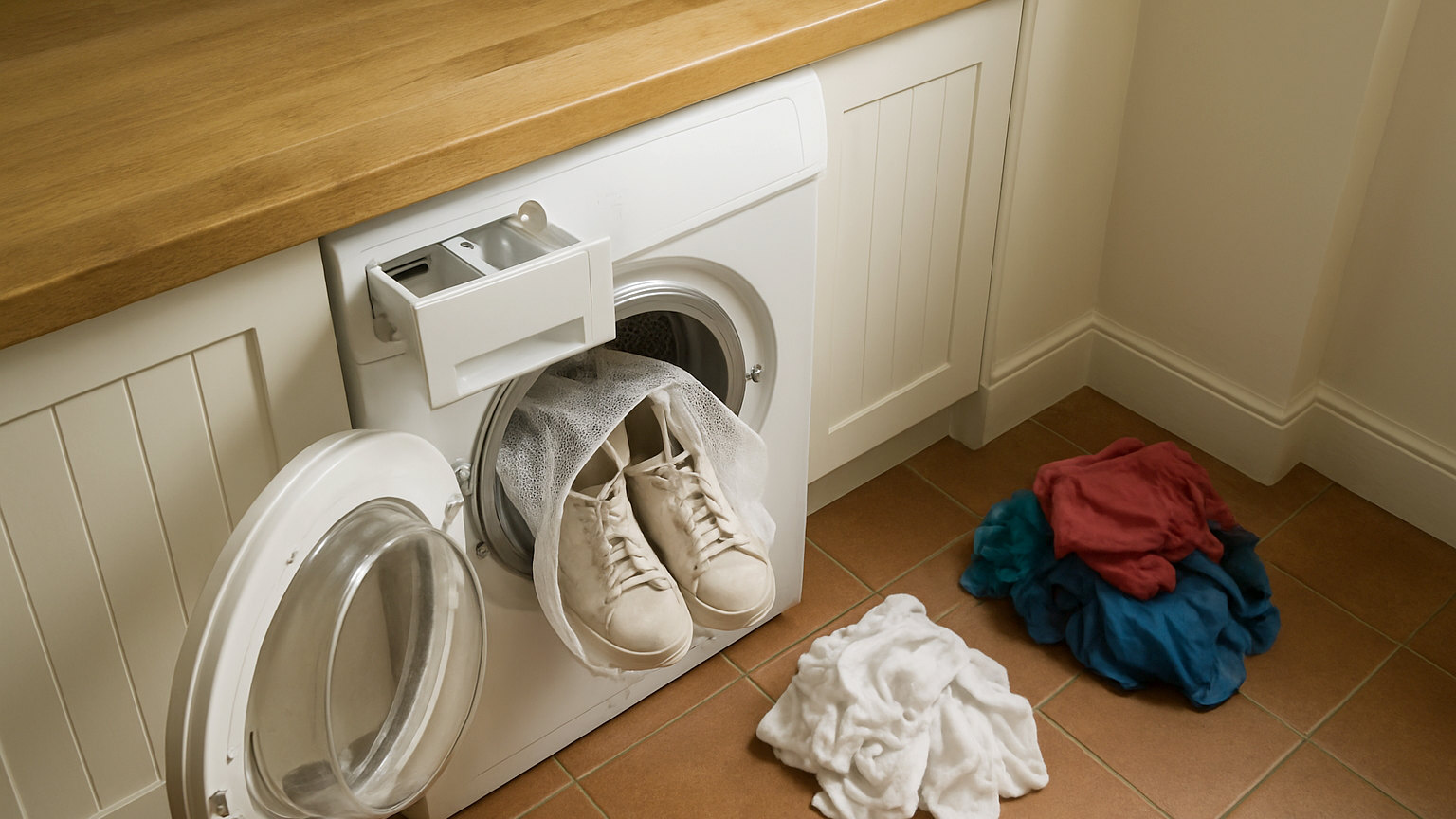
A mesh bag, a low spin and a light load. The bag stops small items being drawn into the seal and prevents hooks and zips catching. A low spin avoids the creasing and distortion that a fast spin sets in. And a drum no more than a third full lets gentle cycles work as designed, since they rely on water rather than agitation.
Which items get misclassified most often?
Bras, which are structured and usually go through a normal cycle. Anything containing elastane, which most people wash hot without realising. Viscose, which is often assumed to be robust because it feels like cotton. And printed t-shirts, where the fabric is fine and the print is not.
What is the practical approach?
Keep a small mesh bag or a separate basket for delicates as they come off, so the decision is made once rather than at the machine. Run a delicates load every week or two, cool and on a gentle cycle with a low spin. Hand wash only the small number of items that genuinely require it, and dry everything flat unless you know it can be hung.