Granite and quartz look similar and behave differently. Granite is natural stone, porous, and needs periodic sealing. Quartz is an engineered composite of stone dust and resin, non-porous, and must never be sealed. Both are damaged by acid, and quartz is additionally vulnerable to heat.
What is the daily routine for both?
- Wipe with a soft cloth and warm water with a little washing up liquid.
- Or use a pH neutral stone cleaner.
- Rinse with a clean damp cloth.
- Dry and buff with a microfibre cloth.
Wipe spills promptly, particularly anything acidic such as lemon, vinegar, wine or tomato.
What should never be used?
- Vinegar, lemon juice and any acidic cleaner, which etch natural stone and damage the resin in quartz.
- Bleach, which discolours quartz and can damage a granite sealer.
- Abrasive powders and pads, which dull the polish.
- Oven cleaner and strong alkalis.
- Generic multi surface sprays, many of which are acidic or contain solvents.
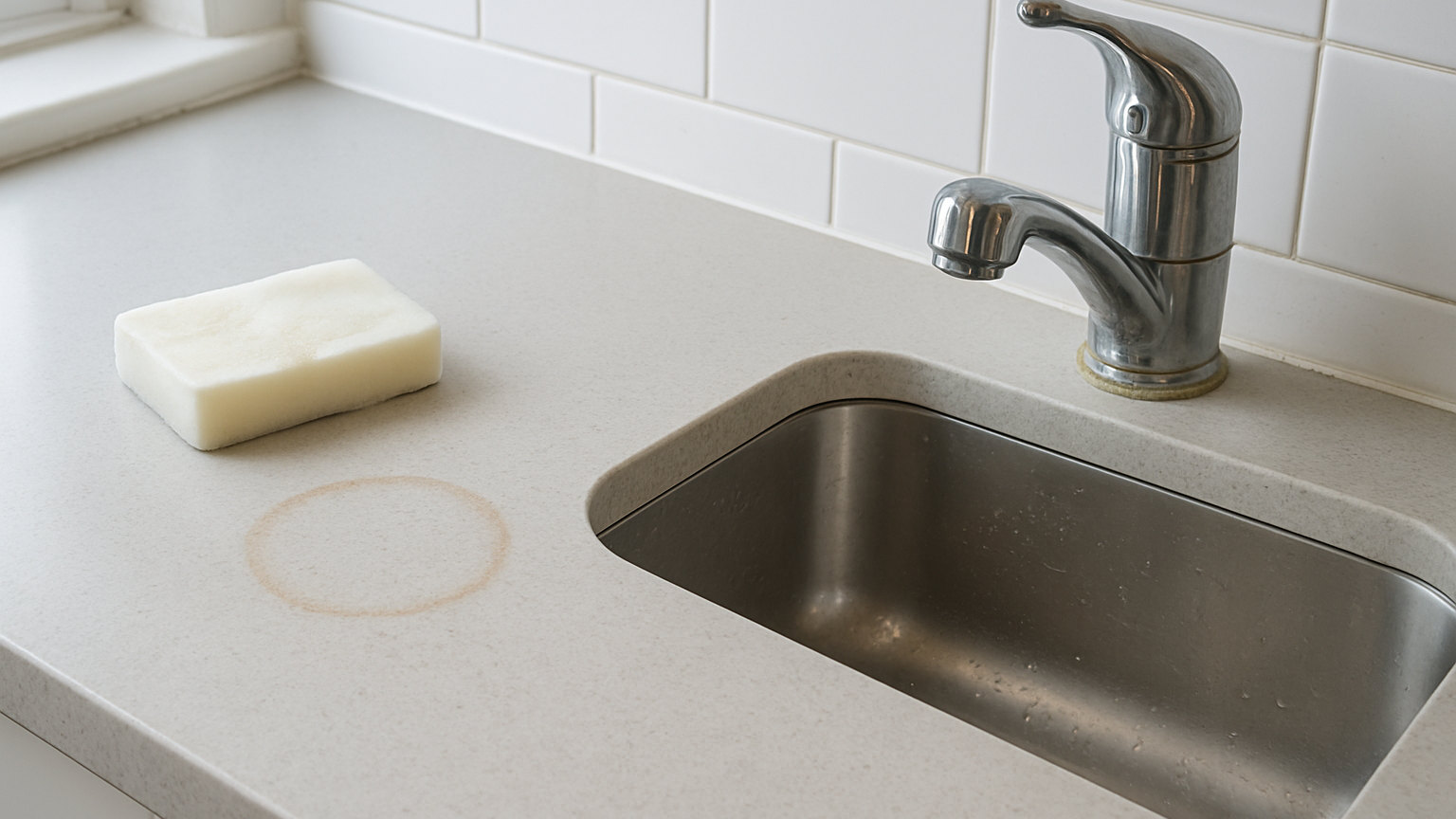
Etching is physical damage to the surface, showing as a dull patch, and it cannot be cleaned away.
How do you know if granite needs sealing?
The water test. Put a few drops of water on the surface in several places and leave them for fifteen minutes. If the water beads and wipes away leaving nothing, the seal is intact. If the stone darkens where the water sat, it is absorbing and needs resealing.
Most granite needs sealing every one to three years, and the area around the sink and hob wears faster than the rest.
How do you seal granite?
Clean the surface thoroughly and let it dry completely, ideally for a day. Apply an impregnating stone sealer according to the instructions, let it penetrate for the stated time, then buff off all excess before it dries on the surface.
Ventilate the room, since most sealers are solvent based. Repeat the water test afterwards to confirm it worked.
Why must quartz not be sealed?
Because it is non-porous. A sealer cannot penetrate, so it sits on the surface, dries into a film and leaves a hazy, patchy finish that is difficult to remove.
Anyone offering to seal a quartz worktop is either mistaken or selling something unnecessary.
What about heat?
Granite tolerates heat well, though a very hot pan on a cold slab can cause thermal shock in rare cases. Quartz does not: the resin binder discolours and can scorch above around 150 degrees, and heat damage to quartz is permanent.
Use a trivet on both. On quartz, treat it as a rule rather than a precaution, including for slow cookers and air fryers left running.
How do you remove stains from granite?
A poultice. Mix a paste of bicarbonate of soda with water for an organic stain, or with a little hydrogen peroxide for a stubborn one, spread it thickly over the mark, cover with cling film taped at the edges, and leave it for twenty four hours.
As it dries it draws the stain out of the stone. Remove, rinse, dry and reseal that area. Repeat if needed.
What about marble and limestone?
Considerably more vulnerable than granite. Both are calcium based and etch almost instantly from anything acidic, including a splash of lemon juice. They stain readily and need sealing more often.
Treat them with pH neutral cleaners only, wipe spills immediately, and accept that a marble worktop in a working kitchen will develop a patina.
How do you tell granite from quartz?
Granite has irregular natural variation, with flecks, veins and patches that never repeat. Quartz has a more uniform and consistent pattern, since it is manufactured. The water test settles it too: quartz will not absorb at all, while unsealed granite darkens.
What about the sink cut out edge?
On granite, the cut edge inside the sink opening is often left unsealed and it is the most exposed part of the whole worktop. Seal it when you seal the top, reaching underneath, since water running over that edge every day is what eventually darkens the stone around a sink.