A washing machine that stops mid cycle with water in the drum is a common fault and usually a simple one. Four causes account for the great majority: a blocked filter, a blocked or kinked drain hose, a blocked standpipe or sink trap, and a failed pump. Only the last needs an engineer.
What should you do first?
- Switch the machine off at the wall.
- Try a drain or spin only programme, which sometimes clears a partial blockage.
- If the drum is still full, prepare to empty it manually.
- Lay towels down and have a shallow tray ready.
- Use the small drain hose beside the filter, if fitted, to empty the water into the tray.
A full drum holds a lot of water and it comes out faster than expected, so work with the tray in place and swap it repeatedly.
How do you check the filter?
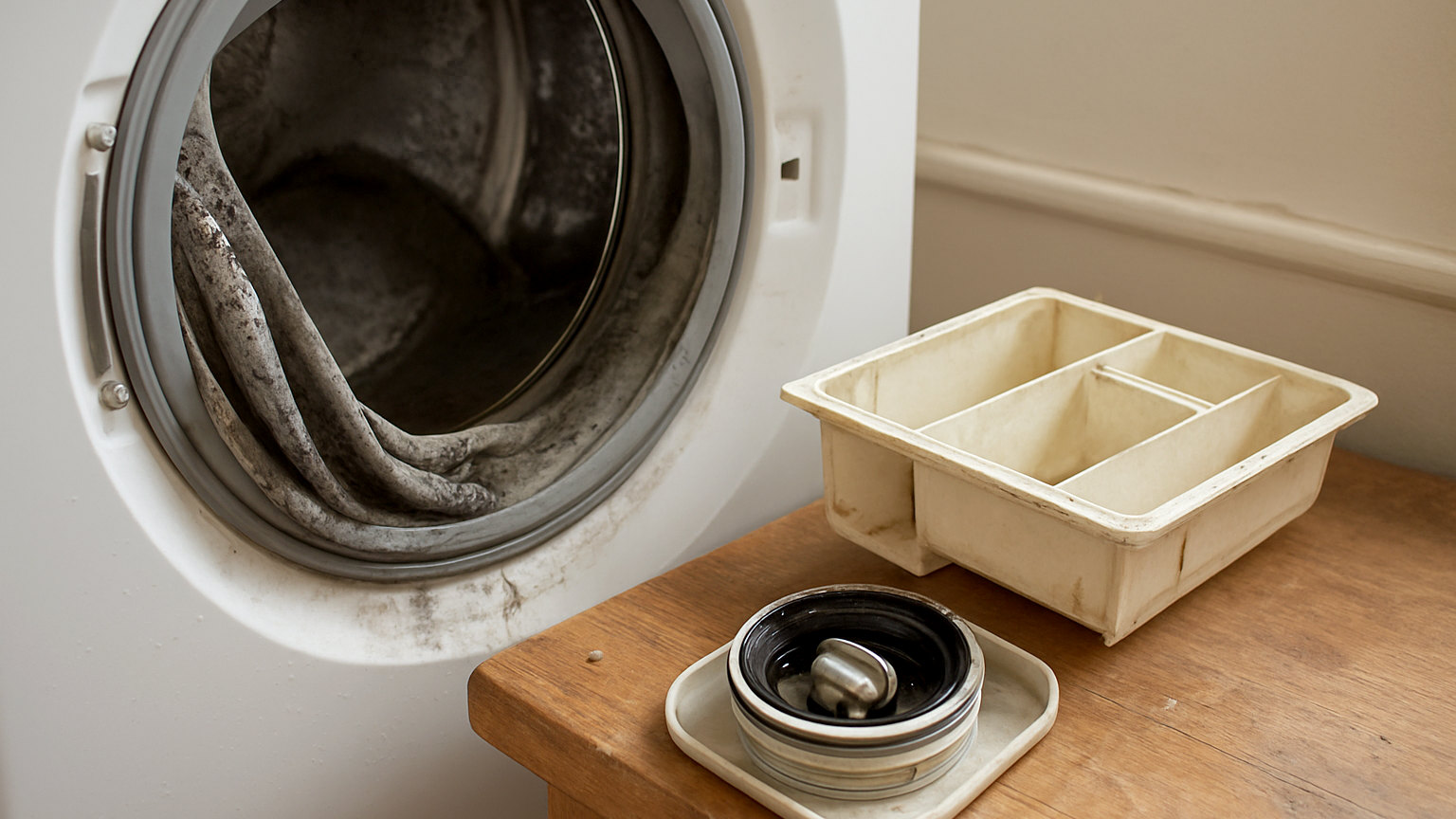
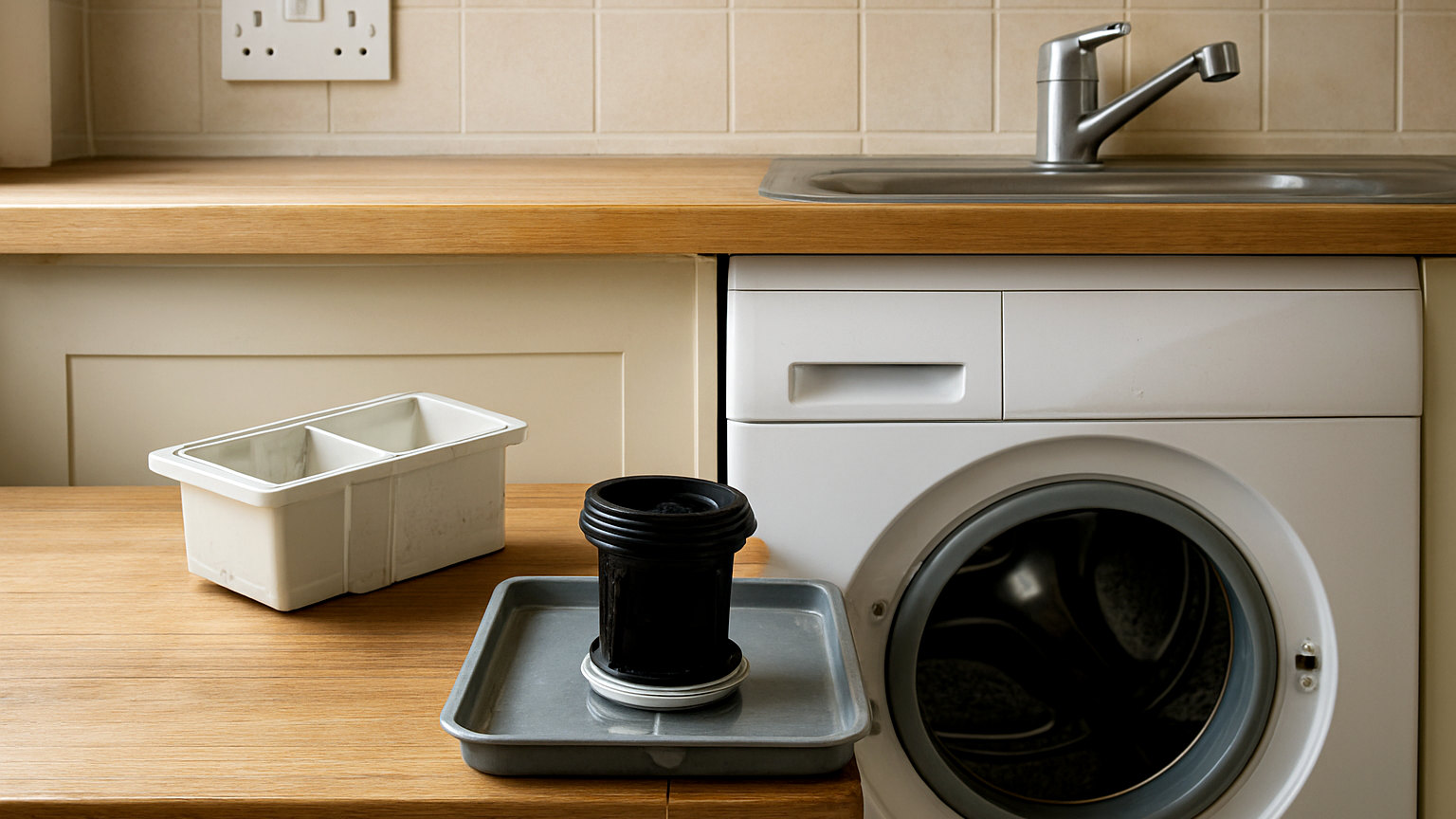
Behind the flap at the bottom front. Unscrew it slowly, letting water out gradually, and pull out whatever is caught. Coins, hair grips, buttons, tissue pulp and bra underwires are the usual finds.
Reach into the housing and check the impeller turns freely, removing anything wrapped around it. This alone resolves most drainage faults.
How do you check the drain hose?
Pull the machine out and look along the whole length. Kinks, crushing against a wall and sagging loops that hold water all restrict flow. Detach it at the standpipe end, hold it over a bucket and see whether water runs through freely.
A hose can be flushed through with a jug of hot water, or cleared with a length of flexible cable.
What about the standpipe or sink trap?
If the machine drains into a standpipe, the trap at its base blocks with detergent scum and lint. If it drains into the sink waste, the sink trap is the likely culprit, and the sign is water backing up into the sink when the machine drains.
Both can be cleared by hand: unscrew the trap over a bucket, clean it and refit. A build up of grey sludge is exactly what you expect to find.
How do you know if it is the pump?
The pump usually makes a noise when it runs. If the machine is silent at the point it should be draining, the pump may have failed or the connection to it may be loose. If it is making a loud humming or grinding noise without moving water, something is jammed in it or the impeller has failed.
Clearing a visible obstruction through the filter housing is reasonable. Anything beyond that means an engineer.
What about error codes?
Most machines display a code for a drainage fault, and the manual explains what each means. It is worth looking up before assuming, since some codes indicate a sensor fault rather than a blockage.
Some machines also need a reset after the fault is cleared, usually by turning the programme dial to off and back on.
What causes it in the first place?
- Not checking pockets, which is the source of most blockages.
- Never cleaning the filter, which lets a partial blockage become a full one.
- Too much detergent, which contributes to the sludge in the hose and trap.
- Washing items that shed heavily without a mesh bag.
- A drain hose installed at the wrong height.
When should you stop and call someone?
When the filter, hose and standpipe are all clear and it still will not drain. When the pump is silent or making an abnormal noise. When there is any sign of water reaching the electrics. Or when the machine is leaking as well as not draining.
Do not remove the front or rear panel of a washing machine to investigate further unless you know what you are doing, since there is a mains supply, a heating element and a heavy suspended drum inside.
How do you prevent it happening again?
Check pockets every time, clean the filter quarterly, and use a mesh laundry bag for anything with wires or small fastenings. Bras in particular should go in a bag, since a freed underwire is the item most likely to get past the filter and into the pump.