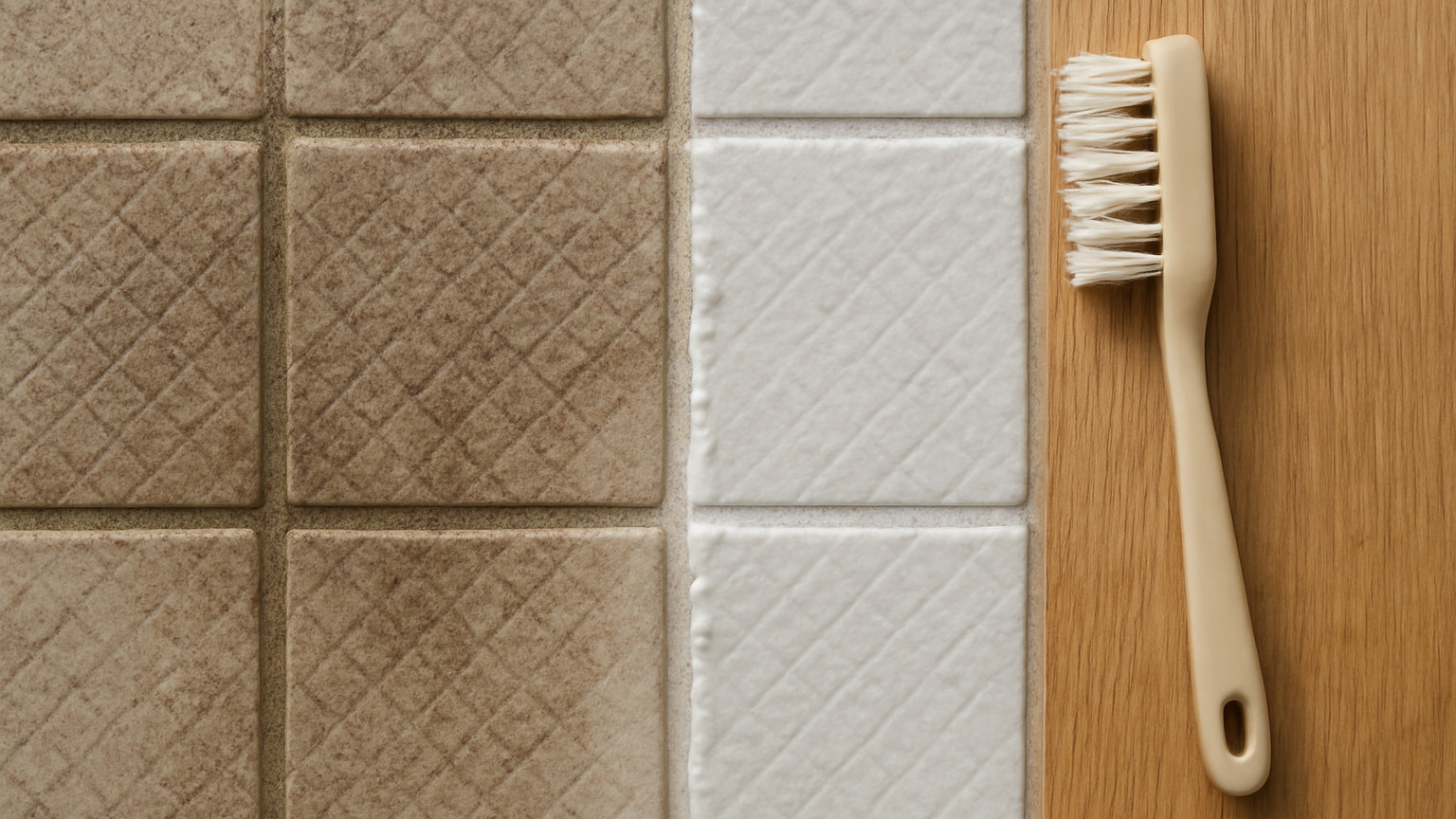
Anti slip and textured tiles work by having a rough surface that grips underfoot. That same roughness traps dirt, soap and detergent, and a flat mop glides over the peaks without reaching into the valleys. They need agitation rather than wiping.
What is the method?
- Sweep or vacuum thoroughly, since grit sits in the texture.
- Apply a cleaning solution and leave it on the surface for five to ten minutes.
- Scrub with a stiff brush, working in more than one direction.
- Mop up the dirty solution rather than spreading it around.
- Rinse with clean water, at least twice.
- Dry as much as possible, or let it air dry with good ventilation.
The two directional scrubbing matters. Texture has a grain and brushing one way only misses one side of every ridge.
What brush should you use?
A stiff nylon deck brush for a floor, a smaller hand brush for edges and corners. A drill brush attachment or an electric floor scrubber makes a considerable difference on a large area such as a wet room.
Avoid wire brushes, which leave metal particles that rust, and avoid anything that will scratch a glazed surface.
Why does rinsing matter so much?
Because detergent left in the texture dries into a sticky film that attracts dirt, and the floor looks worse a week after cleaning than before. Textured tiles hold far more residue than smooth ones, so they need more rinsing rather than less.
Rinse twice with clean water, changing it between passes. A floor that feels slightly tacky when dry has residue on it.
What causes the grey build up?
A combination of soap scum, detergent residue and body oils in a bathroom, or greasy dust in a kitchen. It accumulates gradually in the texture and dulls the whole floor.
An alkaline cleaner such as a dilute soda crystal solution cuts through it, applied, left for ten minutes and scrubbed. In a bathroom, an occasional acidic treatment addresses the soap scum component, kept off any stone and rinsed thoroughly.
What about a wet room floor?
The hardest case, since the floor is permanently wet, sloped to a drain and usually textured. Squeegee after every use, scrub weekly, and pay attention to the area around the drain and the joint where the floor meets the wall.
Check and clean the drain trap regularly, since hair and soap collect there and cause both smell and slow drainage.
Should you use a steam cleaner?
Steam is genuinely useful on textured tiles, because it penetrates the surface and loosens residue without chemicals. Use it with a brush attachment and wipe up the loosened dirt immediately rather than letting it dry back.
Avoid it on natural stone and on any tile with loose or damaged grout, since the pressure can worsen it.
What about slip resistance?
A textured floor that is coated in residue is less slip resistant than a clean one, since the film fills the texture. Cleaning it properly restores the grip as well as the appearance.
Never apply polish or a sealant that leaves a surface film to an anti slip floor, which defeats the purpose entirely.
What about riven slate and quarry tiles?
Both are naturally textured and both are porous. Use a pH neutral cleaner, scrub rather than mop, rinse thoroughly and seal them periodically. Slate flakes if brushed too aggressively, so use a nylon brush and moderate pressure.
How often?
Sweep or vacuum every few days, since grit does the most damage. Scrub weekly in a bathroom or a busy kitchen, and monthly in a low traffic area. Regular light scrubbing prevents the build up that later needs an afternoon.
Does the colour of the tile matter?
For appearance rather than for cleaning. Dark textured tiles show limescale and detergent film as a pale haze, while light ones show dirt. Both need the same treatment, and the dark ones simply make residue more visible, which is arguably an advantage since it prompts the cleaning sooner.