Water pooling in the bottom of a fridge, usually under the salad drawers, is one of the most common appliance complaints and in the great majority of cases it has a single cause: a blocked drain hole. It is a two minute fix that most people do not know exists.
Why is there water in there at all?
Because a fridge produces condensation continuously. Warm moist air enters every time the door opens, meets the cold rear wall, and condenses. That water runs down the back wall by design, into a channel at the base, and out through a small drain hole to an evaporation tray above the compressor at the back, where the warmth of the compressor evaporates it away.
It is a normal and continuous process, and it only becomes visible when the drain blocks.
Where is the drain hole?
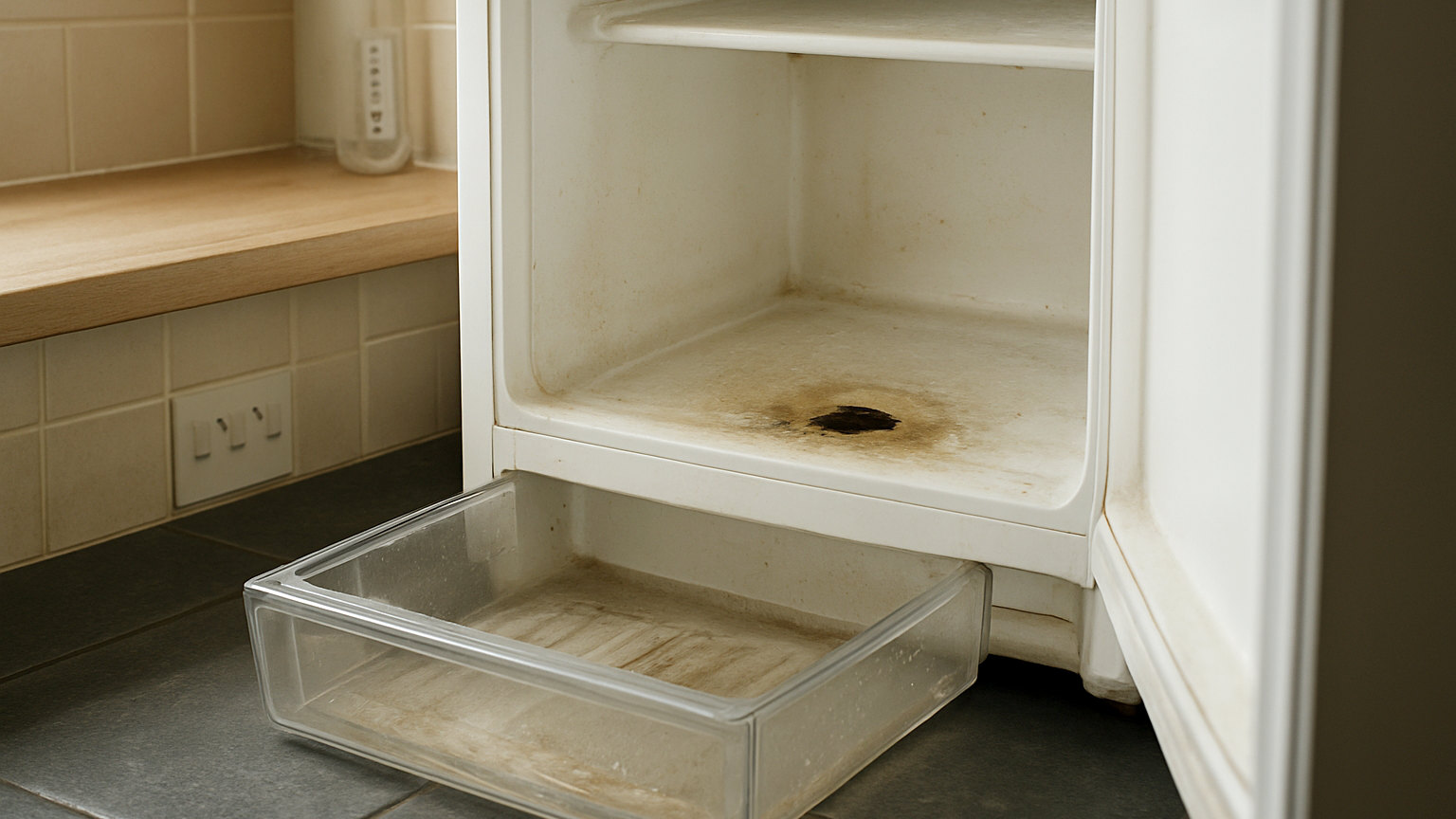
At the back of the fridge interior, at the bottom of the rear wall, usually in a small channel or gutter. It is a hole a few millimetres across and is easy to miss. Some fridges have a small plastic peg or tongue sitting in it.
Take the salad drawers out to see it properly.
How do you clear it?
- Unplug the fridge or switch it off.
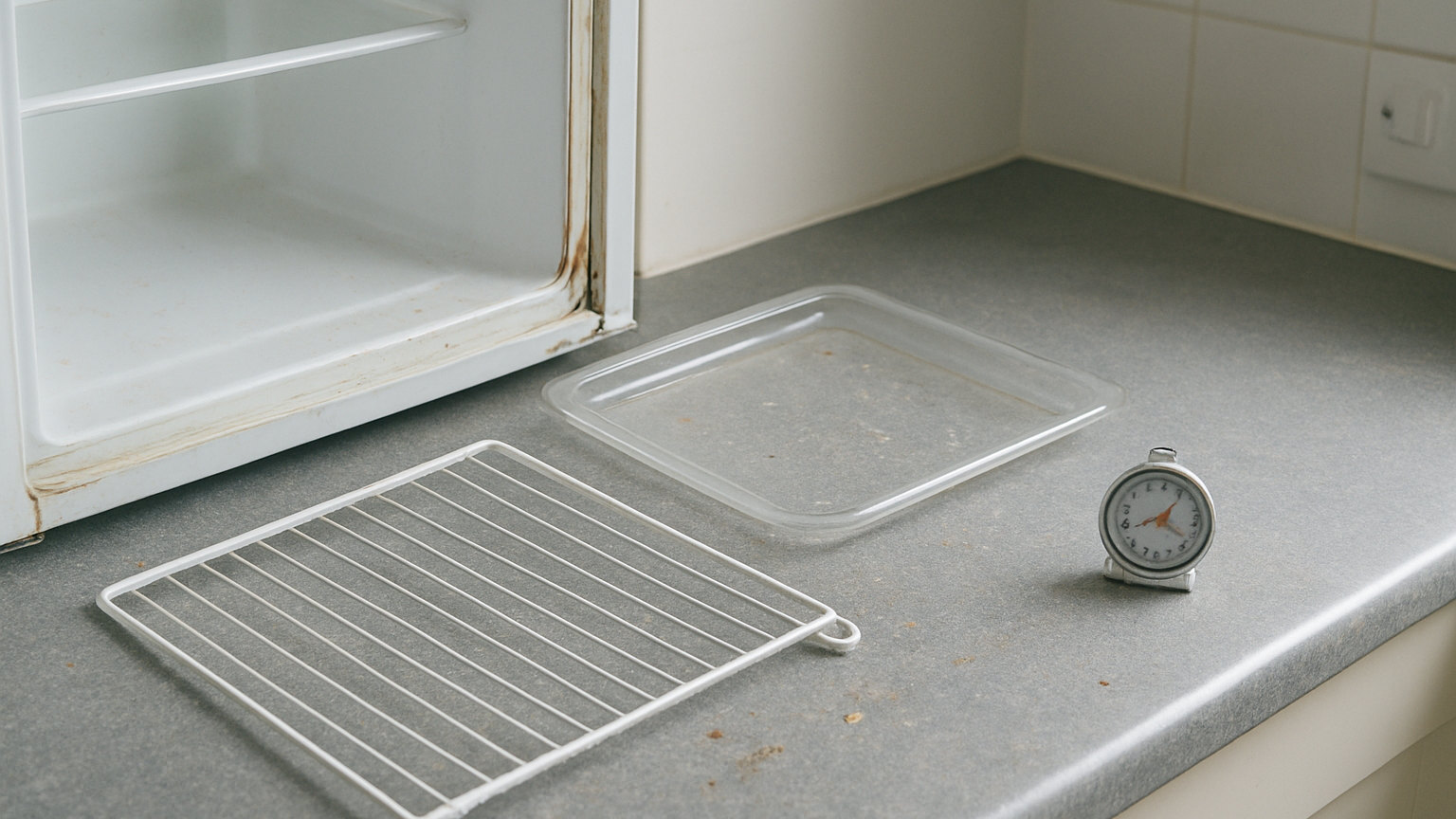
- Remove the drawers and mop up the standing water.
- Clear any visible debris from the channel.
- Work a cotton bud, a pipe cleaner or a length of flexible wire into the hole to break the blockage.
- Flush it with warm water from a turkey baster, a syringe or a small jug.
- Check the water is arriving in the tray at the back.
- Dry the base and refit the drawers.
Do not use anything rigid and sharp, which can pierce the drain tube. Some fridges come with a plastic cleaning tool clipped to the back for exactly this.
What causes it to block?
Food debris, crumbs, bits of packaging and a gradual build up of a slimy biofilm. Ice can also block it, particularly if the fridge is running too cold.
Clearing it once or twice a year as part of a regular clean prevents it entirely.
What else could it be?
- A failing door seal, letting warm moist air in and producing far more condensation than the drain can handle.
- The door left ajar, or a shelf or item preventing it closing fully.
- A fridge set too cold, causing ice on the back wall that melts in bursts.
- A cracked or dislodged evaporation tray, which shows as water on the floor rather than inside.
- A leaking item inside the fridge, which is simple to identify.
- An unlevel appliance, so the water does not run to the drain.
How do you test the door seal?
Close the door on a sheet of paper and pull. If it slides out with almost no resistance, the seal is not making contact at that point. Test at several points around the door.
A seal that is dirty can often be restored by cleaning. A seal that is cracked, hardened or permanently deformed is a replacement part.
What if water is on the floor rather than inside?
That points to the evaporation tray at the back, which may be cracked, overflowing or dislodged. Pull the fridge out carefully and look. An overflowing tray usually means the appliance is producing more condensation than normal, which brings you back to the door seal.
Water on the floor at the front of a fridge freezer can also come from a blocked freezer drain, which is a similar fix.
Does it matter if it is left?
Yes. Standing water goes stagnant and smells, it encourages mould, and it can freeze and block the drain more thoroughly. It is also a sign that condensation is not being managed, which affects the temperature and the efficiency of the appliance.
How do you stop it recurring?
Clear the drain hole as part of the monthly clean, which takes seconds once you know where it is, and keep the channel at the base free of crumbs. Avoid pushing items hard against the back wall, since food pressed against the cold surface both blocks the drainage channel and freezes.